



Saudi Arabia’s economic transformation faces a challenge that cannot be measured solely through GDP growth, fiscal balances or sovereign credit ratings. The escalation of regional conflict, particularly the renewed fighting in Yemen and confrontation with Iran, is introducing a geopolitical risk premium into investment decisions. Even when a country retains substantial financial buffers, investors may demand higher returns, additional guarantees and stronger protection against potential disruptions.
The central question is no longer simply whether Saudi Arabia can finance its ambitious development programme. It is whether international private capital will remain willing to participate on commercially sustainable terms.
Strong foundations, growing uncertainty
Saudi Arabia entered the current crisis with considerable financial resources and an expanding non-oil economy. According to the General Authority for Statistics, gross foreign direct investment inflows increased by 33.5% in 2025, reaching SAR159.1 billion ($42.4 billion).
However, the picture became less encouraging in 2026. GASTAT data reported by Argaam show that net FDI inflows declined by approximately 19.4% year on year in the second quarter, reaching SAR19.1 billion.
These figures do not establish that military escalation alone caused the slowdown. Investment flows also reflect project cycles, corporate restructuring and broader financial conditions. Nevertheless, the deterioration coincides with a period of substantially heightened regional uncertainty.
In its October 2026 World Economic Outlook, the International Monetary Fund projected Saudi Arabia’s economy would contract by 3.3% in 2026 before recovering by 7.9% in 2027.
Despite these pressures, S&P Global Ratings maintained the Kingdom’s A+ sovereign rating with a stable outlook in September.
This apparent contradiction reveals an important distinction: sovereign resilience does not necessarily translate into unchanged financing conditions for individual investments.
How geopolitical risks become financial costs
Military tensions influence investment through several interconnected channels: higher borrowing costs, increased insurance premiums, disrupted supply chains and greater uncertainty surrounding project completion.
According to State Street Investment Management, GCC bond and sukuk spreads widened sharply following the regional escalation, although much of the initial increase subsequently reversed.
For investors, the risk premium is therefore not necessarily permanent or uniform. Its size depends on the probability of further attacks, the duration of the conflict and the vulnerability of particular assets.
Long-term infrastructure investments are especially sensitive. International lenders may shorten loan maturities, increase financing margins or require stronger security arrangements. Even a relatively modest increase in the cost of capital can significantly affect the commercial viability of projects financed over several decades.
A prolonged conflict could also shift investment toward projects offering quicker returns and lower physical exposure, rather than large, capital-intensive developments.
Insurance: a second layer of risk
The insurance market provides one of the clearest illustrations of how geopolitical uncertainty translates into measurable costs.
Following renewed Houthi attacks, Reuters reported in July 2026 that indicative war-risk premiums for vessels crossing the southern Red Sea had increased to 1–2% of a ship’s value, compared with approximately 0.3% before the escalation.
Maritime insurance is only one component. Infrastructure developers must also consider political violence coverage, business interruption insurance and protection against physical damage.
Where such insurance becomes expensive or difficult to obtain, lenders may demand additional guarantees or revise financing conditions.
This creates a broader dilemma: how much geopolitical exposure can private investors absorb before project risks effectively return to the government?
PIF and the challenge of mobilizing private capital
The Public Investment Fund (PIF) occupies a central position in this equation.
According to its 2025 Annual Report, PIF managed more than $900 billion in assets and continued expanding its domestic investment portfolio.
However, the fund’s strategic direction is evolving. Its 2026–2030 strategy emphasizes more selective capital allocation, stronger financial returns and greater private-sector participation.
Regional instability could complicate this transition by increasing the financing costs borne by private partners.
At the same time, PIF retains access to diversified funding arrangements. On November 3, 2026, it announced $3 billion in credit facilities backed by Italy’s export credit agency SACE and involving 25 international banks.
Such arrangements illustrate how institutional guarantees can support international financing even during periods of elevated uncertainty. They do not, however, eliminate the underlying geopolitical risks.
The real test for Vision 2030
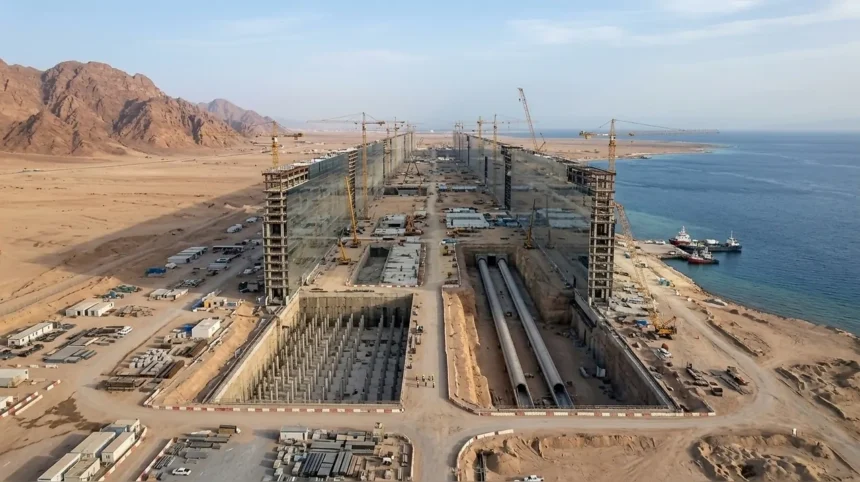
The consequences will likely differ across sectors. Tourism, aviation, logistics and large coastal developments may face greater exposure to security disruptions, while digital services and selected technology investments could prove comparatively resilient.
The critical variable is the duration of instability. A relatively short crisis may produce temporary increases in borrowing and insurance costs without fundamentally altering long-term investment strategies.
A prolonged confrontation, however, could delay investment commitments, raise project costs and increase reliance on public financing.
Saudi Arabia possesses the financial resources and institutional capacity to absorb considerable shocks. Yet its diversification strategy ultimately requires more than continued government spending.
The decisive measure of success will be whether the Kingdom can preserve investor confidence and attract sustainable private capital while operating in a region where geopolitical risk has become an increasingly important part of the investment equation.