



Friday, 2 Oct 2026
  • About Us
  • Contact Us
  • Sitemap
Subscribe
site logo
  • World
    • Travel
  • Politics
    Two oil tankers moored at an offshore loading terminal in the Red Sea, with pipelines and marine infrastructure extending into the distance.

    Two Seas and One Barrel: How Geopolitics Is Rewriting Saudi Oil Logistics

    By
    Arabinform Editorial
    Oil tanker sailing through the Strait of Hormuz near a rocky coastline

    The Post-Hormuz World: How One Strait Redrew the Global Order

    By
    Arabinform Editorial
    Illustration of Gulf security forces, naval patrols, drones, energy infrastructure and ports symbolizing the Gulf’s new security bargain

    The Gulf’s New Security Bargain: Autonomy Without Abandoning America

    By
    Arabinform Editorial
  • Business and Economy
  • Technology
  • Environment
  • Opinion

    Beyond Strategic Depth: Rethinking Pakistan’s Afghanistan Policy

    By
    Mian Masood Tariq

    Saudi Banking Has Gone Digital. The Harder Test Is What Comes Next

    By
    Haris Santana, S.Si

    Western Sahara: Independence Is Fading, but Not Legally Dead

    By
    Muhammad Haseeb Sulehria

    The Next AI Risk Is Not Intelligence – It Is Authority

    By
    Dr. Gleb Tsipursky

    The Makkah Pact and the Risk of New Fault Lines

    By
    Amin Bagheri

    Red Sea Turmoil and Pakistan’s Maritime Future

    By
    Mian Masood Tariq
  • Op-Ed Submission Guidelines
  • 🔥
  • Saudi Arabia
  • Business and Economy
  • World
  • Opinion
  • Politics
  • China
  • energy
  • Travel
  • Gulf
  • economy
Font ResizerAa
The Arabinform JournalThe Arabinform Journal
Search
  • World
  • Politics
  • Business and Economy
  • Technology
  • Environment
  • Travel
  • Opinion
  • Op-Ed Submission Guidelines
  • Contact Us
  • About Us
Have an existing account? Sign In
Follow US
© Copyright 2007-2026 The Arabinform Journal. All rights reserved. All registered trademarks herein are the property of their respective owners.
The Arabinform Journal > Blog > Politics > Two Seas and One Barrel: How Geopolitics Is Rewriting Saudi Oil Logistics
Politics

Two Seas and One Barrel: How Geopolitics Is Rewriting Saudi Oil Logistics

Saudi Arabia’s latest oil disruptions show that energy competitiveness increasingly depends on logistics as well as production costs, making pipelines, ports, tankers, insurance and alternative routes strategic assets in an era when geopolitical risk can rapidly migrate between maritime corridors.

Arabinform Editorial
Last updated: October 1, 2026 11:13 am
By
Arabinform Editorial
6 Min Read
Share
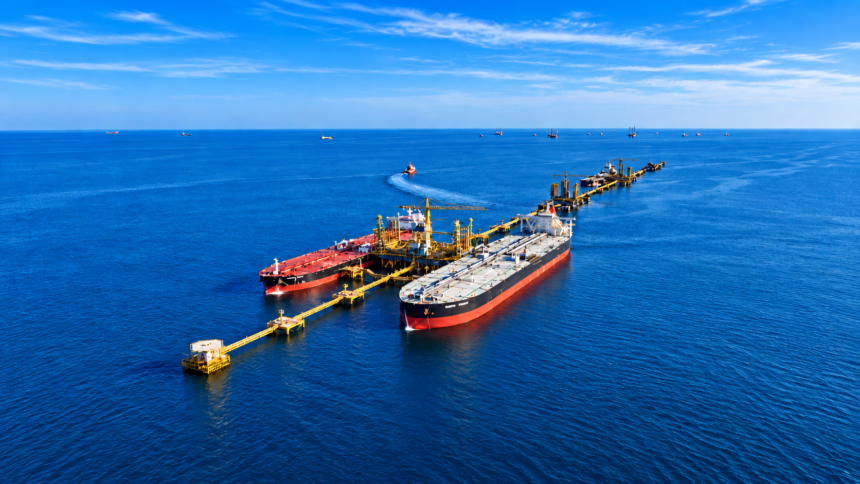
Two oil tankers moored at an offshore loading terminal in the Red Sea, with pipelines and marine infrastructure extending into the distance.
Oil tankers at an offshore export terminal. Rising geopolitical risks are making shipping routes, insurance and logistics increasingly important to the economics of oil exports
SHARE

For decades, Saudi Arabia’s oil advantage was usually measured underground. Enormous reserves, low production costs and the ability to raise output quickly. The turmoil of 2026 is adding another metric. For an exporter exposed to geopolitical chokepoints, what increasingly matters is not only the cost of producing a barrel, but the cost and reliability of delivering it.

That distinction has become unusually visible this month. Saudi Arabia resumed tanker loadings at the Red Sea port of Yanbu after restarting the East-West Pipeline, which had been shut following drone attacks on September 11. Reuters reported on September 29 that pipeline flows had recovered to roughly 2-2.65 million barrels per day, with Kpler expecting 3-4 million bpd in the following days. Restoring the pre-attack rate of about 5.5 million bpd could take another month.

Geography as an asset and a vulnerability

Saudi Arabia possesses something most Gulf producers lack. Large-scale access to two seas. Its East-West Pipeline carries crude from the producing regions in the east to Yanbu on the Red Sea, allowing exports to bypass the Strait of Hormuz.

The infrastructure is substantial. Aramco says the roughly 1,200-kilometre system can handle about 7 million bpd, while the U.S. Energy Information Administration describes it as Saudi Arabia’s principal alternative to the maritime chokepoints around the Arabian Peninsula. Earlier this year, Aramco highlighted the pipeline, west-coast terminals and storage capacity as central elements of its supply resilience.

During the disruption of Gulf shipping, this flexibility became strategically valuable. Reuters estimated that Saudi Arabia diverted around 4 million bpd through the pipeline toward the Red Sea when flows through Hormuz were constrained.

But September demonstrated the limitation of geographical diversification. Risk can be shifted without being eliminated. An exporter that avoids Hormuz becomes more dependent on pumping stations, Yanbu, Red Sea shipping lanes and ultimately the security environment around Bab el-Mandeb.

The new cost of a barrel

This is where the economics of oil security are changing.

According to Reuters, quoted war-risk insurance premiums for Saudi-linked tankers calling at Yanbu rose from below 1% of vessel value in early July to around 3% in September. For Saudi ports farther south, premiums could reach 7%, while chartering a tanker was estimated at more than $500,000 a day. A war-risk premium alone could add roughly $3 million to a voyage from Yanbu and considerably more on some higher-risk routes.

These are not production costs in the conventional sense, but economically they perform a similar function. They determine how much value remains in a barrel once it reaches the buyer.

The old model of energy security focused heavily on spare production capacity. The emerging model requires spare logistical capacity as well alternative pipelines, terminals, storage, tanker access, insurance arrangements and multiple export directions.

The key question is whether such redundancy should now be treated as permanent strategic infrastructure rather than emergency backup. Building excess capacity appears expensive in peaceful periods. In a crisis, however, the ability to switch coasts can be worth more than marginal reductions in extraction costs.

The Russian parallel

Russia provides an imperfect but useful comparison. Its challenge has been driven primarily by sanctions rather than by the physical geography confronting Saudi Arabia, but the result has been similar. Logistics became part of the oil price equation.

After European demand collapsed following 2022, Russian producers redirected much of their seaborne crude toward China, India and Turkey and increasingly relied on a tanker network operating outside traditional Western shipping and insurance systems. For several years, this adaptation helped preserve export volumes despite sanctions.

The lesson for Saudi Arabia is not that it should reproduce Russia’s system. Rather, it is that control over production alone is no longer enough. Tankers, financing, insurance, storage and the political reliability of maritime corridors can become strategic assets comparable to pipelines and oilfields.

From spare capacity to spare routes

Yanbu’s reopening reduces immediate pressure, but it does not restore the old assumption that Saudi oil can always reach markets cheaply through one secure alternative route. The Gulf and the Red Sea now carry different combinations of military, infrastructure and insurance risk.

Saudi Arabia therefore enters a new phase of energy strategy. Its traditional advantage – spare barrels – increasingly needs to be accompanied by spare routes.

The broader implication extends beyond the Kingdom. In a more fragmented geopolitical system, the competitive position of an oil exporter may increasingly depend on a new calculation not simply how cheaply can the barrel be produced, but how many politically and commercially viable ways exist to deliver it?

TAGGED:East West pipelineHormuzRed SeaSaudi ArabiaYanbu
Share This Article
Facebook LinkedIn Email Copy Link Print
Previous Article Cargo ship sailing along a desert coastline in the Red Sea-Arabian Sea corridor Red Sea Turmoil and Pakistan’s Maritime Future
Leave a Comment Leave a Comment

Click here to cancel reply.

Please Login to Comment.

Newsletter

Saudi Arabia and Gulf news, analysis and business insights delivered to your inbox.

Thank you!

You have successfully joined our subscriber list.

Stay Informed with Reliable and Timely Updates!

Independent analysis of Saudi Arabia and the Gulf, delivered clearly and on time. Follow Arabinform across our platforms for reliable updates, key economic developments, regulatory changes and insights that matter.
FacebookLike
XFollow
TelegramFollow
Google NewsFollow
LinkedInFollow
RSS FeedFollow

You Might Also Like

Composite illustration of a football star in an Al Nassr jersey against the Riyadh skyline, symbolizing Saudi Arabia’s growing global influence through football.
EntertainmentTravel

The Ronaldo Doctrine: How One Footballer Became Saudi Arabia’s Most Valuable Investment

By
Arabinform Editorial
Saudi Crown Prince Mohammed bin Salman with Chinese President Xi Jinping in Riyadh
Opinion

The Gulf’s New Economic Power Play

By
Amin Bagheri
Saudi Arabia skyline with investment growth charts and Arabinform Journal banner for an article on the Kingdom’s changing investment strategy.
Business and Economy

Saudi Arabia’s New Economic Test: From Megaprojects to Measurable Returns

By
Arabinform Editorial
Business and EconomyEnvironmentTravel

Saudi Arabia and Russia Sign Visa Waiver Agreement to Boost Bilateral Investment

By
Arabinform Editorial
site logo
Twitter Facebook Linkedin Telegram Rss

About US

The Arabinform Journal. Independent analytical platform covering business, finance, politics, technology, and global affairs in the Arab world and beyond

Creative Commons License
Top Categories
  • World
  • Business and Economy
  • Politics
  • Technology
  • Environment
  • Opinion
Usefull Links
  • About Us
  • Terms & Conditions
  • Privacy Policy
  • Cookie Policy
  • Op-Ed Submission Guidelines
  • Contact Us
  • Sitemap

© 2026 The Arabinform Journal.
All rights reserved.
All registered trademarks herein are the property of their respective owners.

Welcome Back!

Sign in to your account

Username or Email Address
Password

Lost your password?

Not a member? Sign Up