


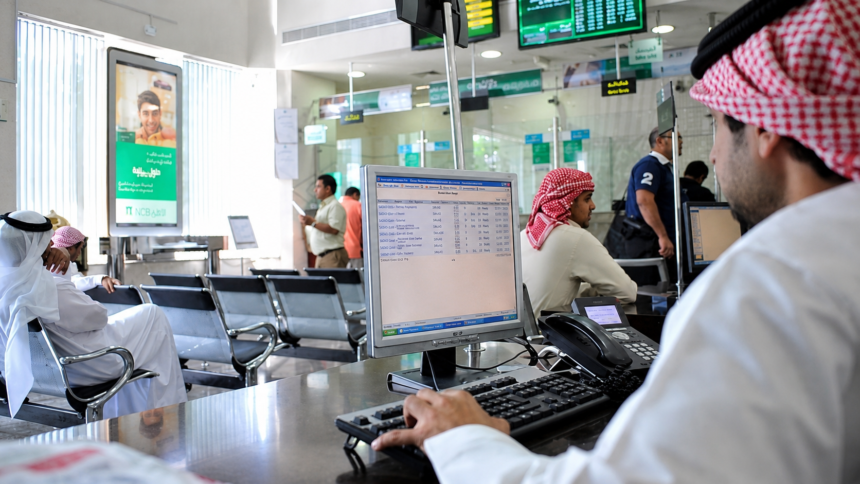
Saudi Arabia has already crossed an important threshold in its financial transformation. The Saudi Central Bank (SAMA) says electronic payments accounted for 85% of retail payments in 2025, up from 79% in 2024, while electronic transactions rose to 14.6 billion from 12.6 billion. The implication is increasingly clear: digital finance is no longer a new channel in the Kingdom; it is becoming basic economic infrastructure.
That changes the policy and competitive question. The next phase is not mainly about persuading customers to use apps or cards. It is about whether banks and fintech firms can convert digital activity into better credit decisions, more useful products and broader access to finance.
From access to economic value
Digital access alone is an incomplete measure of financial transformation. A customer who can open an account remotely is not necessarily financially included in a meaningful sense, and an SME that accepts digital payments does not automatically obtain working capital on suitable terms.
Saudi SME finance has nevertheless expanded sharply. The chief executive of the SME Bank said cumulative credit facilities extended to micro, small and medium-sized enterprises reached about SAR467 billion by the end of 2025, an increase of 33% year on year.
The more difficult question is what comes next. Can lenders use the increasingly rich digital footprint of businesses to assess younger, smaller or less conventional companies more accurately? If so, the value of Saudi Arabia’s payments transformation could extend far beyond convenience at the checkout.
Open banking as a data rail
Open banking could help close that gap. In March 2026, SAMA moved from sandbox testing to licensing fintech companies to provide open-banking services, explicitly linking the framework to better use of customer financial information, stronger cooperation between banks and fintech firms and wider financial inclusion.
Its strategic importance may therefore lie less in creating another consumer-facing product than in creating a new financial data rail. With customer consent and appropriate safeguards, transaction histories can give lenders a richer picture of cash flows, seasonality and business resilience. That could strengthen underwriting where conventional balance sheets or collateral do not fully capture a company’s operating reality.
What Indonesia suggests
Indonesia offers a useful comparison because it shows that high financial access does not eliminate deeper financing problems. According to Bank Indonesia, the country’s 2025 national survey measured financial inclusion at 92.74%, while financial literacy stood considerably lower at 66.46%.
There is a similar tension in business finance. Indonesia’s Financial Services Authority reported that MSME credit grew only 1.82% year on year in July 2025, compared with 9.59% growth in corporate credit. Its subsequent MSME financing rules encouraged greater use of technology, tailored lending models and alternative credit scoring.
The lesson is not that Saudi Arabia should copy Indonesia. It is that digital adoption and financial inclusion are not synonymous. Payments generate data, but they do not automatically generate productive credit. The institutional capacity to interpret that data responsibly is what matters.
The trust constraint
This is where artificial intelligence becomes both an opportunity and a risk. AI can support credit assessment, fraud detection and more personalized financial services, but greater dependence on automated models also raises questions about data quality, explainability and accountability.
SAMA’s governor highlighted this dilemma in October 2025, arguing that financial-sector adoption of AI requires strong governance, transparency and accountability, with particular attention to data integrity, model explainability and ethical use. He also warned that concentration among major AI service providers could create operational and cyber risks.
That caution is central to the next phase of Saudi banking. Open banking and AI will deepen financial inclusion only if customers trust how their information is collected, shared and interpreted. Poorly governed models could misprice risk or encourage inappropriate lending just as easily as they could improve access.
The next competitive advantage
Saudi Arabia’s first digital-finance phase demonstrated an ability to scale infrastructure and adoption quickly. The second phase will be harder because success will be measured less by transaction volumes than by outcomes: whether SMEs obtain more appropriate finance, whether consumers receive genuinely useful products, and whether data-driven decisions remain transparent and secure.
The likely winners will not simply be the institutions with the most sophisticated applications. They will be those that combine technology, data and human judgment well enough to turn digital convenience into economic value.
Saudi banking has become highly digital. The next test is whether it can become financially intelligent.

Indonesian banking professional with more than 25 years of experience in the financial sector. He has spent much of his career with Bank Kalsel, the Regional Development Bank of South Kalimantan, where he has held managerial roles covering branch operations, SME and commercial banking, credit management and regional business development. He holds a degree in Mathematics and Computer Science from Universitas Padjadjaran.