



Monday, 24 Aug 2026
  • About Us
  • Contact Us
  • Sitemap
Subscribe
site logo
  • World
    • Travel
  • Politics
    Oil tanker sailing through the Strait of Hormuz near a rocky coastline

    The Post-Hormuz World: How One Strait Redrew the Global Order

    By
    Arabinform
    Illustration of Gulf security forces, naval patrols, drones, energy infrastructure and ports symbolizing the Gulf’s new security bargain

    The Gulf’s New Security Bargain: Autonomy Without Abandoning America

    By
    Arabinform
    Saudi-American Arms Deal Signals Strategic Shift Amid Regional Realignment

    Saudi-American Arms Deal Signals Strategic Shift Amid Regional Realignment

    By
    Arabinform
  • Business and Economy
  • Technology
  • Environment
  • Opinion

    Global Surge in Gold Investment Signals Flight to Safety Amid Political Uncertainty

    By
    Arabinform

    Transatlantic Turbulence Fuels U.S. Economic Strategy Shift

    By
    Arabinform

    Awaiting the White Swans: Could Sanctions on Russia Be Lifted Soon?

    By
    Arabinform

    OPEC+ on the Brink: Structural Pressures Undermine Oil Pact Stability

    By
    Arabinform

    Algeria’s Energy Strategy: Balancing Hydrocarbons and the Green Transition

    By
    Arabinform

    Trump’s Second Term: A Fast Start With Fading Momentum

    By
    Arabinform
  • Op-Ed Submission Guidelines
  • 🔥
  • Business and Economy
  • Saudi Arabia
  • World
  • China
  • Politics
  • energy
  • Opinion
  • Travel
  • Gulf
  • economy
Font ResizerAa
The Arabinform JournalThe Arabinform Journal
Search
  • World
  • Politics
  • Business and Economy
  • Technology
  • Environment
  • Travel
  • Opinion
  • Op-Ed Submission Guidelines
  • Contact Us
  • About Us
Have an existing account? Sign In
Follow US
© Copyright 2007-2026 The Arabinform Journal. All rights reserved. All registered trademarks herein are the property of their respective owners.
The Arabinform Journal > Blog > Business and Economy > Saudi Arabia’s Hormuz Shock Absorber: Resilience, but Not Immunity
Business and Economy

Saudi Arabia’s Hormuz Shock Absorber: Resilience, but Not Immunity

Saudi Arabia appears better placed than most Gulf economies to absorb a Hormuz disruption, but its resilience depends on pipeline capacity, fiscal buffers, non-oil momentum, and whether geopolitical risk stays temporary rather than becoming structural.

Arabinform
Last updated: June 29, 2026 1:05 pm
By
Arabinform
5 Min Read
Share
Strait of Hormuz
Strait of Hormuz
SHARE

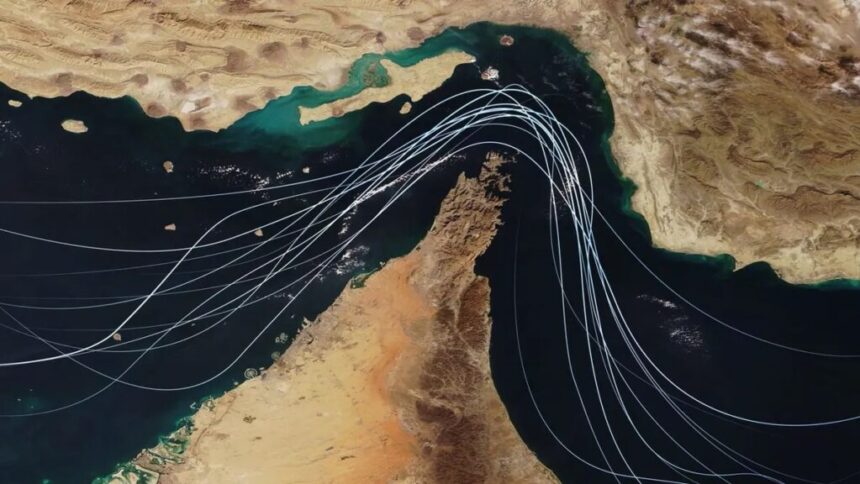
Saudi Arabia has emerged from the latest Strait of Hormuz shock looking less vulnerable than many of its Gulf peers, but the lesson is not that geography no longer matters. It is that the kingdom has built enough redundancy, fiscal depth and domestic growth momentum to absorb disruption — provided the shock remains temporary.

The Strait remains the region’s central energy bottleneck. The International Energy Agency estimates that nearly 20 million barrels per day of oil moved through Hormuz in 2025, including about 6.23 million b/d from Saudi Arabia. The same IEA assessment notes that Saudi Arabia’s East-West pipeline links Abqaiq to Yanbu on the Red Sea, with a design capacity of 5 million b/d and reported capacity of 7 million b/d, though sustained operation at that level has not been fully tested.

That caveat is crucial. Saudi Arabia can redirect a meaningful share of crude away from the Gulf, but it cannot make Hormuz irrelevant overnight. The real question is whether rerouting capacity, port logistics and tanker availability can work under prolonged stress, not just during a limited disruption.

A diversified buffer

The economic cushion is also broader than pipelines. GASTAT reported that Saudi real GDP grew 3.0 percent year on year in the first quarter of 2026, with non-oil activities contributing more to growth than oil activities. Financial, insurance and business services expanded by 5.4 percent, while non-refining manufacturing grew by 4.0 percent.

This matters because a Hormuz shock is not only an oil-export problem. It can weaken investor confidence, raise shipping costs, delay imports and disrupt project execution. A larger non-oil base gives Riyadh more domestic demand to lean on, but it also creates new exposure: tourism, logistics, construction and finance are all sensitive to perceptions of regional risk.

Reuters reported on June 3 that the IMF saw the Saudi economy as resilient during the war-related disruption, helped by rerouting through the East-West pipeline and Red Sea ports, but warned that growth could fall to about 2 percent in 2026 if confidence and non-oil activity remain under pressure.

Fiscal strength with a cost

Saudi Arabia’s public finances give it another shock absorber. The Ministry of Finance’s FY2026 budget projects SAR 1.313 trillion in expenditure, SAR 1.147 trillion in revenue and a deficit of SAR 165 billion, or around 3.3 percent of GDP. It also expects public debt to rise to 32.7 percent of GDP in 2026 and government reserves at SAMA to remain around SAR 390 billion.

These numbers suggest room to borrow, smooth spending and protect priority projects. But they also show the price of resilience: Saudi Arabia is using fiscal space to sustain transformation while oil revenue remains exposed to both price volatility and security risk. The key issue is whether deficits remain a strategic bridge to diversification or become a recurring cost of maintaining growth.

A cautious outlook

The Hormuz shock strengthens the case for Saudi Arabia’s logistics strategy, Red Sea infrastructure and industrial localization. It also reinforces Riyadh’s argument that Vision 2030 is not only a diversification program, but a national resilience project.

Yet resilience is not the same as invulnerability. A short disruption can be managed through pipelines, reserves and policy coordination. A longer conflict would test export capacity, insurance markets, investor sentiment and the government’s ability to prioritize spending. Saudi Arabia may be one of the Gulf economies best placed to withstand a Hormuz shock, but the durability of that position will depend on whether the shock remains a maritime interruption — or becomes a lasting regional risk premium.

TAGGED:East West pipelinefiscal buffersHormuz shocknon oil growthoil exportsSaudi Arabia
Share This Article
Facebook LinkedIn Email Copy Link Print
Previous Article Visa-free travel continues to expand globally Visa-Free Access Expands Globally, but with Strategic Caveats
Next Article Editorial illustration showing Riyadh skyline and the title “Venture Capital in Saudi Arabia” for an Arabinform Journal article Saudi-Style Venture Capital: Why Founders Now Need a Riyadh Strategy

Newsletter

Saudi Arabia and Gulf news, analysis and business insights delivered to your inbox.

Thank you!

You have successfully joined our subscriber list.

Stay Informed with Reliable and Timely Updates!

Independent analysis of Saudi Arabia and the Gulf, delivered clearly and on time. Follow Arabinform across our platforms for reliable updates, key economic developments, regulatory changes and insights that matter.
FacebookLike
XFollow
TelegramFollow
Google NewsFollow
LinkedInFollow
RSS FeedFollow

You Might Also Like

Arab Economies Under Pressure from U.S. Tariff War
Business and Economy

Arab Economies Under Pressure from U.S. Tariff War

By
Arabinform
Editorial illustration showing Riyadh skyline and the title “Venture Capital in Saudi Arabia” for an Arabinform Journal article
Business and Economy

Saudi-Style Venture Capital: Why Founders Now Need a Riyadh Strategy

By
Arabinform
Travel

Surge in Hospitality Projects Signals Regional Economic Recovery

By
Arabinform
Fast Company Middle East
Environment

Saudi Arabia’s Global Leadership in Water Resource Management

By
Arabinform
site logo
Twitter Facebook Linkedin Telegram Rss

About US

The Arabinform Journal. Independent analytical platform covering business, finance, politics, technology, and global affairs in the Arab world and beyond

Creative Commons License
Top Categories
  • World
  • Business and Economy
  • Politics
  • Technology
  • Environment
  • Opinion
Usefull Links
  • About Us
  • Terms & Conditions
  • Privacy Policy
  • Cookie Policy
  • Op-Ed Submission Guidelines
  • Contact Us
  • Sitemap

© 2026 The Arabinform Journal.
All rights reserved.
All registered trademarks herein are the property of their respective owners.

Welcome Back!

Sign in to your account

Username or Email Address
Password

Lost your password?

Not a member? Sign Up