


For decades, Pakistan’s Afghanistan policy was shaped by a powerful strategic assumption: a friendly government in Kabul would make Pakistan’s western frontier safer. The Taliban’s return to power in 2021 appeared, at least initially, to offer Islamabad an opportunity to build a more cooperative relationship with its western neighbour. Five years later, that expectation has been badly undermined.
Pakistan is confronting a renewed militant threat along its western frontier, particularly from Tehreek-e-Taliban Pakistan (TTP). Islamabad maintains that the group operates from Afghan territory and has repeatedly demanded that Kabul prevent its soil from being used for attacks against Pakistan. UN monitoring reports have also documented the continuing presence and activities of terrorist groups in Afghanistan and highlighted the regional consequences of cross-border militancy.
The lesson for Islamabad is uncomfortable but unavoidable: Pakistan can no longer build its Afghanistan policy around the expectation of strategic alignment. It must build it around Pakistan’s national security interests.
Pakistan’s Security Cannot Be Negotiable
Recent incidents demonstrate why this policy shift cannot wait.
On the night of August 31 and September 1, Pakistani security forces reported foiling an infiltration attempt along the Pakistan-Afghanistan border in North Waziristan. The military later said that subsequent engagements brought the number of militants killed from that group to 25. In separate operations between September 3 and 5, security forces reported killing another 21 militants in multiple engagements across Khyber Pakhtunkhwa.
These are not isolated border incidents. Pakistan has faced a sustained militant threat, and Islamabad increasingly links that threat to TTP networks operating from across the border.
Pakistan’s position has been consistent: it does not seek confrontation with the Afghan people, but it cannot accept attacks against Pakistani civilians and security personnel originating from territory controlled by another state. Pakistan’s Foreign Ministry has explicitly called for an unequivocal commitment that Afghan territory will not be used for terrorism against Pakistan.
That is not an unreasonable demand. It is a basic responsibility expected of any state toward its neighbours.
Kabul’s Failure to Address the TTP Has Changed the Strategic Equation
Pakistan initially pursued engagement with the Taliban authorities, hoping that historical, religious and political links could translate into cooperation against militant groups. That calculation has produced disappointing results. The central issue is no longer whether Pakistan can maintain dialogue with Kabul. It should. The question is whether dialogue without consequences can protect Pakistan. The answer is increasingly clear: it cannot.
UN sanctions monitors have also highlighted the broader problem, including the threat posed by the TTP and other militant organisations operating in Afghanistan and their implications for regional security. Pakistan therefore needs to abandon the assumption that diplomatic engagement, by itself, will persuade Kabul to address the threat.
From Strategic Depth to Strategic Clarity
Pakistan should replace the old concept of strategic depth with strategic clarity. Islamabad should no longer measure its Afghanistan policy by whether Kabul is politically friendly, ideologically sympathetic or diplomatically cooperative. The test should be much simpler: does Afghanistan prevent its territory from being used to threaten Pakistan?
This should become the central condition governing bilateral relations.
Pakistan can maintain diplomatic channels with Kabul while simultaneously applying pressure. Engagement should be conditional, measurable and reversible. If the Taliban authorities take verifiable action against TTP networks, Pakistan should be prepared to expand diplomatic and economic cooperation. If they fail to do so, Islamabad should impose proportionate diplomatic, economic and security consequences.
Promises should no longer be enough. Pakistan needs verification.
A Stronger Border, Not an Endless War
Pakistan must also strengthen its western frontier.
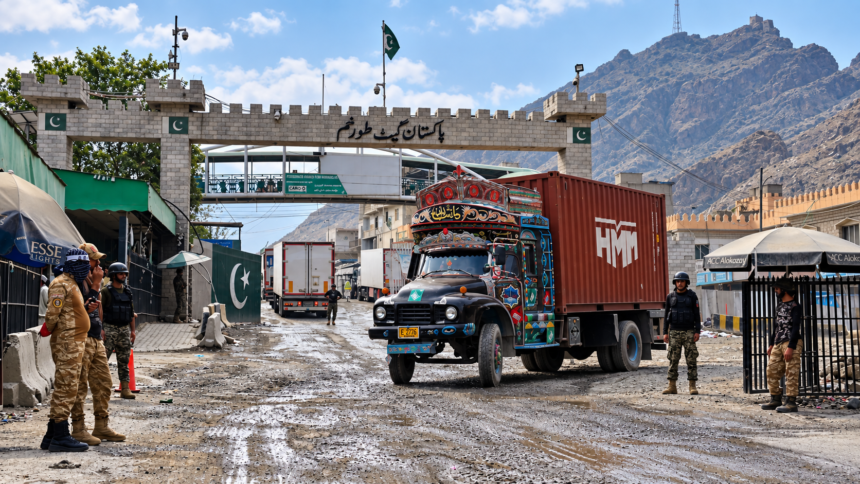
This does not mean pursuing permanent confrontation with Afghanistan. It means making infiltration significantly harder through better surveillance, intelligence-sharing, biometric controls at formal crossings, counterterrorism coordination and improved border infrastructure.
Pakistan should also protect legitimate trade and transit. Security and economic interests are not mutually exclusive. A secure border should facilitate lawful commerce while preventing militants, weapons and illicit networks from moving across it.
The objective should be deterrence, not perpetual war.
Diplomacy Must Serve Pakistan’s Security
Pakistan should also make greater use of regional diplomacy.
China, Türkiye, Saudi Arabia, Qatar and other regional actors have a stake in preventing Afghanistan from becoming a source of wider instability. Islamabad should work with these states to develop a mechanism through which Kabul’s counterterrorism commitments can be independently monitored and verified.
Pakistan should raise the TTP issue in every relevant diplomatic forum, supported by evidence, intelligence assessments and documented incidents.
The objective should not be to internationalise Pakistan’s conflict with Afghanistan. It should be to ensure that the consequences of cross-border terrorism are understood as a regional security problem rather than Pakistan’s bilateral complaint alone.
Pakistan Needs a Policy Reset
Pakistan cannot change its geography. Afghanistan will remain its neighbour, regardless of who governs Kabul. But Islamabad can change its strategy.
The answer is neither unconditional engagement nor perpetual military escalation. Pakistan needs conditional diplomacy backed by credible deterrence: dialogue when it serves Pakistani interests, economic engagement when it strengthens stability, and decisive security action when Pakistan’s sovereignty and citizens are threatened.
The era of assuming that political influence in Kabul automatically produces security in Pakistan is over. Pakistan does not need strategic depth. It needs strategic clarity. And that clarity begins with one principle: Afghan territory must never become a launchpad for attacks against Pakistan — and Islamabad should judge Kabul not by its assurances, but by its actions.
Disclaimer: Views expressed by writers in this section are their own and do not necessarily reflect The Arabinform Journal point of view.

A policy analyst and independent researcher based in Islamabad, Pakistan. He has been associated with the Centre for Pakistan and Gulf Studies (CPGS). His research interests include foreign policy, strategic affairs, security, and geopolitical issues.