

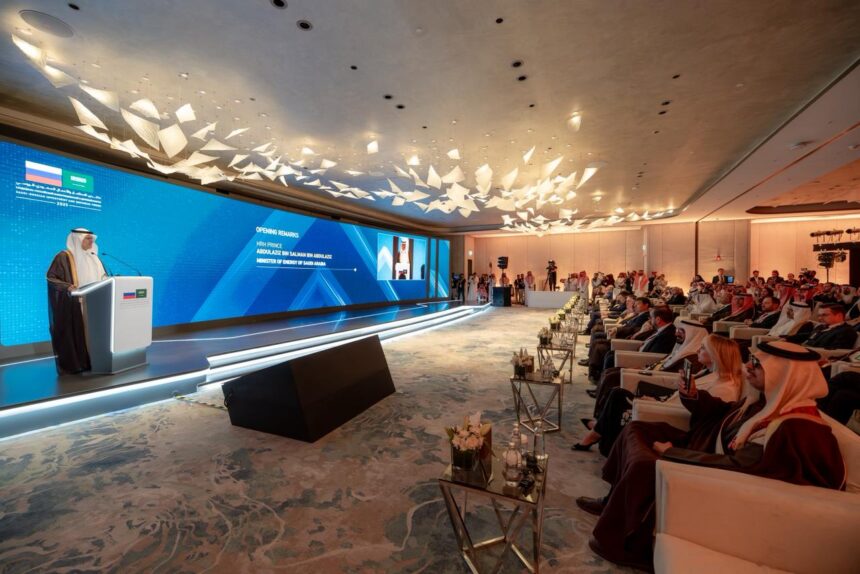
In a strategic move aimed at strengthening bilateral relations, Saudi Arabia and Russia have signed a mutual visa exemption agreement during the Saudi-Russian Investment and Business Forum held in Riyadh. The forum, organized by the Saudi Ministry of Energy and the Ministry of Investment, brought together senior officials, investors, and policymakers from both countries to explore opportunities for deeper economic cooperation.
The event was officially opened by Prince Abdulaziz bin Salman, Saudi Arabia’s Minister of Energy and head of the Saudi side of the Saudi-Russian Joint Committee, along with Alexander Novak, Deputy Prime Minister of the Russian Federation and head of the Russian side. Also in attendance was Prince Faisal bin Farhan, Saudi Arabia’s Minister of Foreign Affairs, underscoring the forum’s diplomatic and economic significance.
According to the Saudi Press Agency, one of the key outcomes of the forum was the signing of a mutual visa exemption agreement, a development poised to facilitate travel and expand the mobility of professionals, business leaders, and investors between the two countries.
Removing Barriers to Economic Engagement
The visa waiver agreement is expected to significantly reduce bureaucratic hurdles for citizens of both nations, particularly those engaged in commercial and investment activities. By allowing visa-free travel, the deal aims to streamline cross-border engagement, encourage knowledge exchange, and accelerate the pace of joint ventures.
This move is consistent with Saudi Arabia’s ongoing efforts to position itself as a global investment hub, in line with Vision 2030 objectives. For Russia, the agreement presents an opportunity to deepen its presence in Middle Eastern markets and diversify its international economic partnerships.
The agreement complements existing cooperation frameworks, particularly those established under the Saudi-Russian Joint Committee, which has led several rounds of dialogue over the years focusing on oil market coordination, industrial development, and infrastructure investment.
Reinforcing Climate and Energy Dialogue
Alongside the visa waiver deal, the forum witnessed the signing of a memorandum of understanding (MoU) on climate cooperation and low-emission development between the Saudi Ministry of Energy and the Russian Ministry of Economic Development. This agreement marks a pivot in bilateral cooperation, signaling a shared interest in integrating environmental objectives into economic policy.
The MoU outlines a collaborative framework for managing greenhouse gas emissions, sharing best practices, and potentially launching joint climate-related projects. The document reflects a growing trend among major hydrocarbon producers to address climate concerns while maintaining their roles as key energy suppliers.
This dual-track approach—deepening investment cooperation while embracing climate responsibilities—marks an evolution in Saudi-Russian relations, expanding beyond traditional oil-focused coordination under the OPEC+ alliance.
Strategic Implications for Regional and Global Markets
The timing and content of the agreements suggest a deliberate alignment of diplomatic, economic, and environmental interests. The forum builds on the momentum of the recent OPEC+ ministerial meetings, where both countries played pivotal roles in shaping the group’s production strategies and long-term planning mechanisms through 2027.
The visa waiver deal, while symbolic in nature, holds practical value for market actors. By easing movement between two key energy-producing nations, it opens new channels for dialogue, project execution, and capital flow. The climate cooperation MoU, on the other hand, reflects the increasing interdependence between economic development and environmental sustainability in global energy policy.
This comprehensive approach positions both nations to play influential roles in the ongoing global energy transition, where access to capital, technology, and political coordination will define future market leadership.
Institutionalizing Long-Term Cooperation
The Saudi-Russian Investment and Business Forum represents an institutional milestone in bilateral relations. It provides a structured platform for public and private sector engagement, facilitates direct dialogue on policy and investment priorities, and reinforces the importance of long-term strategic cooperation.
Through mechanisms such as the Saudi-Russian Joint Committee, Riyadh and Moscow are working to create predictable and transparent frameworks that encourage investment, technological exchange, and climate policy alignment. The latest agreements—on visa exemption and climate cooperation—signal a mutual readiness to engage beyond conventional parameters and adapt to the evolving demands of the global economy.
By reducing entry barriers and creating joint policy frameworks, both nations are sending a message of openness and strategic vision, aimed at attracting investment, promoting innovation, and maintaining relevance in a rapidly shifting international energy landscape.