

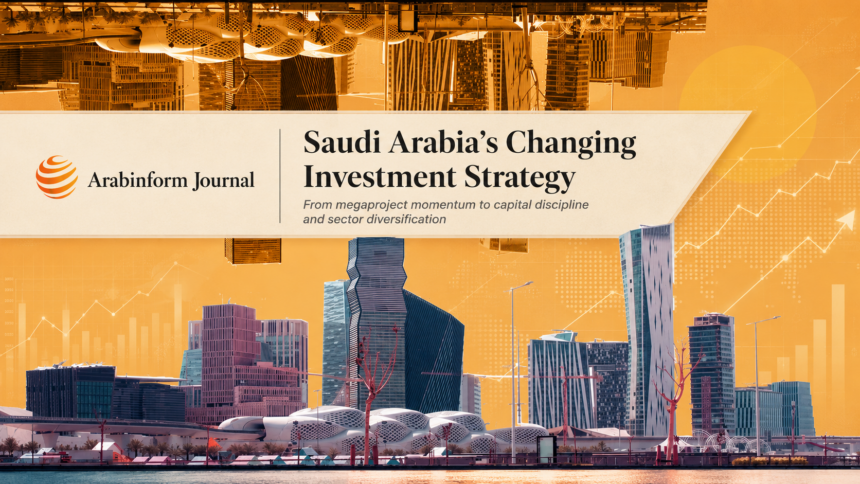
Saudi Arabia is no longer being judged only by the scale of its announcements. In 2026, the sharper test for Vision 2030 is whether capital-intensive projects can deliver recurring revenue, private-sector activity and credible financial returns. That shift is now visible in official language: the Public Investment Fund’s new 2026–2030 strategy says it will focus on “value realization,” “sustainable returns” and “capital efficiency,” while keeping its dual mandate of transforming the economy and generating financial returns.
A stronger economy, but a harder test
The macroeconomic base remains supportive. GASTAT said Saudi real GDP grew 3.0% year-on-year in the first quarter of 2026, with oil and non-oil activities each expanding 2.9%. Non-oil activities were the largest contributor to growth, adding 1.7 percentage points, while financial and insurance activities and business services grew 5.4%.
Yet the same data also show why the next phase is more difficult. On a seasonally adjusted basis, real GDP declined 1.2% from the previous quarter, suggesting that the economy remains sensitive to timing, project execution and external shocks. The key question is whether non-oil growth can become less dependent on public spending and more driven by commercially viable firms.
PIF’s recalibration
PIF remains the central instrument of the transition. In April 2026, it said assets under management had risen from $150 billion in 2015 to more than $900 billion, while it had invested more than $199 billion in new Saudi projects from 2021 to 2025. It also said it contributed more than $243 billion to real non-oil GDP from 2021 to 2024, equivalent to about 10% of Saudi non-oil GDP in 2024.
But size is no longer enough. Reuters reported in June 2026 that PIF’s preliminary assets under management reached $910 billion at the end of 2025, below a $1.09 trillion Vision 2030 target. The same report said real non-oil GDP reached $892 billion, short of a $904 billion target, while foreign direct investment stood at 2.8% of GDP against a 3.4% goal.
This does not undermine the diversification project, but it changes how success should be measured. The issue is no longer simply whether Saudi Arabia can mobilize capital; it is whether that capital produces productivity, exports, jobs and investable companies.
From spectacle to feasibility
The clearest sign of recalibration is the treatment of megaprojects. Reuters reported in January 2026 that construction work on the Mukaab, the cube-shaped centerpiece of Riyadh’s New Murabba development, had been suspended while financing and feasibility were reassessed. The report described a broader move from futuristic, high-cost projects toward initiatives seen as more urgent and potentially profitable.
In April, Reuters reported that PIF’s new five-year plan would focus investment on six domestic ecosystems, and that Governor Yasir Al-Rumayyan said local investment should be 80% of the portfolio, with international investment at 20%. He also said NEOM’s The Line was no longer a “must-have” by 2030, although he denied project cancellations.
A cautious interpretation would see this not as retreat, but as triage. Every large transformation program eventually has to distinguish between symbolic assets, enabling infrastructure and projects capable of paying their way. The real test will be whether reprioritization improves returns without weakening investor confidence.
The fiscal constraint
Fiscal pressure explains why measurable returns matter. Reuters reported that Saudi Arabia posted a first-quarter 2026 deficit of SAR125.7 billion, close to its full-year projection of $44 billion, while government spending rose 20% year-on-year to SAR386.7 billion. Oil revenues fell 3% to SAR144.7 billion, while non-oil revenues rose only 2% to SAR116.3 billion.
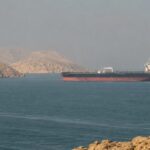
The IMF’s June 2026 mission statement said Saudi Arabia entered 2026 with strong momentum after GDP growth of 4.5% in 2025, but it also warned that disruption to maritime traffic through the Strait of Hormuz was weighing on both oil and non-oil sectors. Assuming shipments normalize, the IMF said growth in 2026 could hold at about 2%, with non-oil activity supported by domestic demand, government spending and ongoing capital projects.
That forecast captures the central dilemma. Government-backed investment is still supporting the economy, but the more it does so, the more important it becomes to prove that projects can eventually stand on their own.
Saudi Arabia’s new economic test is therefore not ambition. It is return on ambition. By 2030, the strongest evidence of success may be less spectacular than the original renderings: profitable tourism assets, productive logistics and industrial zones, stronger FDI, higher non-oil revenues and fewer projects requiring permanent fiscal protection.