


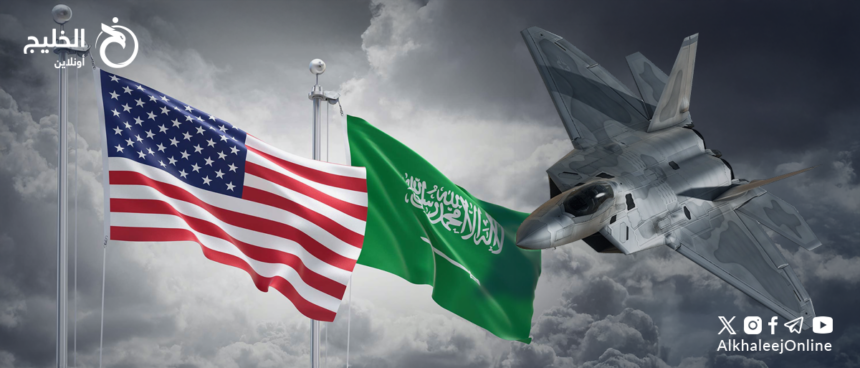
Saudi Arabia and the United States reaffirmed their long-standing defense partnership during a high-profile visit by Saudi Defense Minister Prince Khalid bin Salman to Washington. The visit, which comes at a time of heightened geopolitical tensions in the Middle East, signals renewed cooperation between the two allies.
“A Great Partner”
U.S. Secretary of Defense Pete Hegseth described Saudi Arabia as “a great partner” during his first official meeting with Prince Khalid bin Salman. Addressing concerns about Washington’s commitment to its allies, Hegseth assured that the “America First” policy does not equate to abandoning strategic partners, emphasizing the enduring U.S.-Saudi relationship.
As part of his diplomatic engagements, Prince Khalid also met with U.S. Secretary of State Marco Rubio at the State Department. The two officials discussed bilateral relations, shared security challenges, and global stability efforts, according to the Saudi Press Agency (SPA).
A Reset in Defense Relations?
Prince Khalid’s visit, accompanied by senior Saudi military and diplomatic officials, marks a potential reset in U.S.-Saudi defense relations. These ties had experienced a cooling period under the Biden administration but now appear to be regaining momentum.
The discussions between the two nations take on added significance amid ongoing regional crises. The conflict in Gaza, heightened tensions in the Red Sea, and growing hostility between Washington and Tehran, along with its regional proxies, have placed security cooperation at the forefront of U.S.-Saudi relations.
Key Discussion Points
The meeting between the Saudi and U.S. defense ministers centered on strengthening the strategic partnership. The following key points emerged:
- Hegseth emphasized that U.S.-Saudi relations serve as a “key pillar of stability in a volatile region.”
- The discussions included support for Saudi Arabia against potential threats from Iran and its regional proxies.
- The threat posed by Iran was identified as a central concern in regional security.
- Prince Khalid bin Salman reaffirmed the importance of the U.S.-Saudi partnership, stating that their defense relations are “more critical than ever.”
- He highlighted discussions on expanding military and defense cooperation while addressing regional and global security developments.
Strategic Military Cooperation
Prince Khalid’s visit was accompanied by a high-level delegation, including the Chief of Staff of the Saudi Armed Forces, the Saudi ambassadors to the U.S. and Yemen, and other senior officials. The composition of the delegation underscores the depth of discussions and the strategic significance of the visit.
According to military analyst Qasid Mahmoud, former Deputy Chief of Staff of the Jordanian Armed Forces, U.S.-Saudi defense ties are deeply rooted and extensive, covering military armament, defense policies, and infrastructure development.
“The U.S. has equipped Saudi Arabia with the most advanced air defense systems, including the THAAD missile defense system,” Mahmoud explained in an interview with Gulf Online. “Most of Saudi Arabia’s air bases were built by the U.S., and its air and naval forces have a strong American imprint in terms of training, equipment, and operational doctrine.”
However, Mahmoud clarified that despite the deep military cooperation, the U.S. and Saudi Arabia do not have a formal military alliance akin to NATO-style defense treaties. “The Gulf War saw the peak of U.S.-Saudi military collaboration, but this has never translated into a formalized military alliance,” he noted.
Iran’s Influence and Regional Dynamics
Iran’s influence loomed large over the U.S.-Saudi discussions. Mahmoud highlighted that Tehran’s regional ambitions continue to challenge Saudi security, particularly in Yemen, where Iranian-backed Houthis remain a direct threat.
Despite this, Saudi Arabia has pursued diplomatic engagement with Iran to de-escalate tensions. “Saudi Arabia is working to maintain dialogue with Tehran, irrespective of its alliance with the U.S.,” Mahmoud said. “Yet, even with a potential U.S.-Saudi defense pact, Iran and its proxies will continue to pose security risks, especially given Saudi Arabia’s strategic importance and wealth.”
The Trump Factor
Observers have also linked the Saudi-U.S. defense talks to former President Donald Trump’s political ambitions. Trump has openly praised Saudi Arabia in his recent speeches, leading analysts to suggest that his personal interests may influence U.S.-Saudi defense policy should he return to office.
“Trump sees Saudi Arabia as a crucial economic and strategic partner,” Mahmoud noted. “This is not just about defense or regional security—it’s about economic opportunities for the U.S. military-industrial complex.”
Saudi Arabia, on the other hand, has its own strategic priorities. The Kingdom is heavily investing in military modernization, defense technology, and nuclear energy projects, aiming to reduce reliance on foreign arms imports.
“Saudi Arabia is positioning itself as a leading regional power,” Mahmoud stated. “While Trump may seek economic gains from Saudi cooperation, Riyadh is equally focused on leveraging its defense partnerships to achieve its broader strategic goals.”
Political Implications and U.S.-Saudi Ties
Some analysts believe that Prince Khalid’s visit may have also involved preliminary discussions on a potential visit by Trump to Saudi Arabia. The talks likely included deliberations on arms deals and Saudi defense requirements.
“We are witnessing a period of strengthened and more advanced U.S.-Saudi cooperation,” Mahmoud suggested. “This is expected to have ripple effects on other key issues, particularly the Palestinian cause, as Saudi Arabia continues to place the Palestinian issue high on its agenda.”
Saudi Arabia remains one of Washington’s most strategically significant allies in the Middle East. However, the prospect of a formal U.S.-Saudi defense treaty remains uncertain.
“The real question is: against whom would such an alliance be formed?” Mahmoud asked. “The U.S. and Israel function as a unified strategic bloc, and if Iran is neutralized as a threat, the long-term concern for Saudi Arabia would be the Zionist project, which has long harbored ambitions in the Arabian Peninsula.”
Ultimately, while U.S.-Saudi defense relations are expected to deepen, the extent and nature of this cooperation remain tied to broader geopolitical shifts, economic interests, and Washington’s evolving Middle East policy.
As the region faces mounting security challenges, the coming months will determine whether this renewed military partnership between Riyadh and Washington will merely restore past cooperation or pave the way for a new strategic framework.

Alkhaleejonline.news is a diversified news website focusing on Gulf, Arab, and international affairs. Operating under the slogan “Pulse of the Arabian Gulf,” it provides comprehensive coverage of political, economic, and social developments in the region. The platform offers content in Arabic, catering to a wide audience interested in Gulf-related news and analyses.