



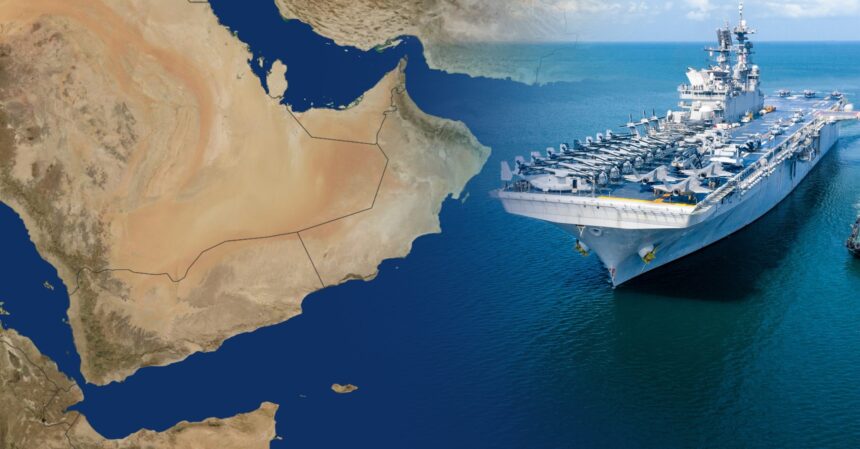
As part of a strategic transformation in maritime defense and industrial autonomy, Gulf countries are intensifying their investments in the shipbuilding sector, with the United Arab Emirates and Saudi Arabia leading a regional shift toward localized manufacturing and defense capabilities. This development reflects growing regional ambitions to bolster security, diversify economies, and reduce reliance on foreign suppliers. According to Al Khaleej Online, the recent launch of the “Abu Dhabi Naval” project highlights the UAE’s latest initiative in this sector.
UAE’s Push for Localized Maritime Manufacturing
The UAE has unveiled the “Abu Dhabi Naval” initiative in partnership with the French defense company CMN NAVAL, part of the Privinvest group, to advance domestic manufacturing of next-generation military vessels. This project, launched by the EDGE Group, aims to strengthen the local industrial base and enhance the country’s naval defense capacity.
The project includes the development of advanced corvettes and patrol vessels tailored for regional maritime security. A key feature is the establishment of a dedicated design office in Abu Dhabi, which will oversee the engineering of future warships, incorporating artificial intelligence, autonomous systems, and electronic warfare technologies. The project is intended to enable the UAE to build a highly capable and autonomous naval manufacturing base.
EDGE Group’s prior success with the launch of the 170-meter “Dhiriyah” vessel in February—designed to combat marine threats—underscores the UAE’s steady progression toward leadership in naval technologies.
Strategic Vision and International Collaboration
The cooperation with CMN NAVAL gives the UAE access to advanced European expertise and logistics networks, supporting local production and integration. The initiative also positions Abu Dhabi as a regional hub for naval engineering and military manufacturing.
Broader strategic goals include increasing regional autonomy in the defense sector and transforming the Gulf into a hub for naval exports. These ambitions are underscored by the development of modern shipyards, such as those near Port Hamad in Qatar, and the planned facilities in Saudi Arabia under Vision 2030.
Saudi Arabia’s Expanding Naval Strategy
Saudi Arabia continues to expand its capabilities in the naval domain through joint ventures and large-scale industrial projects. One key effort includes a partnership with the Italian firm Fincantieri to establish a new shipyard in Jeddah, with an emphasis on advanced ship construction and regional service capabilities.
The kingdom’s Vision 2030 has prompted the creation of a 12-square-kilometer maritime industrial complex near King Salman Global Maritime Industries Complex. Four joint ventures have been formed to manage operations in this industrial zone. These include collaborations with Aramco and international partners such as Hyundai, Lamprell, and Bahri.
The economic zone offers extensive incentives for global companies, including a 20-year tax exemption and a 5% customs duty deferral on imported goods. These measures aim to make the zone an attractive destination for foreign investment in shipbuilding.
Qatar’s Naval Capabilities and Infrastructure
Qatar, too, has established itself as a key player in shipbuilding and naval services, with significant infrastructure supporting the sector. Notably, the Erhama Bin Jaber Al Jalahma Shipyard and the Nakilat Shipyard in Mesaieed offer comprehensive services including repair, refitting, and construction. These facilities play a central role in Qatar’s marine engineering strategy.
Established in 1978, the Mesaieed shipyard provides an integrated environment for both domestic and international clients, further strengthening the regional naval supply chain. Its proximity to key ports like Hamad enhances logistical efficiency and access.
Additionally, Kuwait contributes through its Shuwaikh shipyard, focusing on repair and maintenance, particularly for traditional wooden boats used for tourism and heritage purposes.
Regional Naval Capacity and Fleet Distribution
Data provided in the report shows the naval capacities across Gulf nations. Qatar and Kuwait lead with fleets comprising 123 naval vessels each. The UAE follows with 79, Bahrain with 58, Saudi Arabia with 57, and Oman with 22. Beyond the Gulf, Algeria has the largest fleet in the region with 213 vessels, followed by Egypt with 140 and Iran with 101.
These figures reflect varying levels of investment and industrial maturity, and underscore the importance placed on maritime presence and deterrence.
Strategic Outlook and Future Trends
The ongoing developments reflect a broader Gulf strategy to localize defense production, enhance maritime deterrence, and reduce external dependency. These efforts are driven not only by security concerns but also by economic imperatives to diversify income sources.
According to Dr. Asaad Kazem Sheib, a political science professor cited in the article, the UAE’s partnership with CMN NAVAL is part of a sustained effort to enhance naval defense and industrial autonomy. He emphasizes the military and strategic significance of this move, particularly in the context of regional threats and geopolitical instability.
Sheib also highlights the growing role of artificial intelligence and digital technologies in shaping the future of naval industries. These advancements are seen as vital for the modernization and effectiveness of future maritime systems.
Furthermore, the integration of advanced shipbuilding capabilities is expected to facilitate the development of regional trade routes and communication networks, boosting commercial activities alongside defense readiness.
Conclusion
The Gulf region is undergoing a substantial transformation in naval defense capabilities, supported by strategic investments in local shipbuilding infrastructure and international partnerships. As the UAE, Saudi Arabia, and Qatar continue to enhance their maritime industries, they are not only increasing their defense autonomy but also positioning themselves as emerging hubs in the global naval manufacturing landscape. This shift, while rooted in regional security concerns, also reflects a broader economic and technological modernization effort that could reshape the defense-industrial balance in the Middle East.