



Monday, 19 Oct 2026
  • About Us
  • Contact Us
  • Sitemap
Subscribe
site logo
  • World
    • Travel
  • Politics
    Two oil tankers moored at an offshore loading terminal in the Red Sea, with pipelines and marine infrastructure extending into the distance.

    Two Seas and One Barrel: How Geopolitics Is Rewriting Saudi Oil Logistics

    By
    Arabinform Editorial
    Oil tanker sailing through the Strait of Hormuz near a rocky coastline

    The Post-Hormuz World: How One Strait Redrew the Global Order

    By
    Arabinform Editorial
    Illustration of Gulf security forces, naval patrols, drones, energy infrastructure and ports symbolizing the Gulf’s new security bargain

    The Gulf’s New Security Bargain: Autonomy Without Abandoning America

    By
    Arabinform Editorial
  • Business and Economy
  • Technology
  • Environment
  • Opinion

    The Makkah Pact and the Risk of New Fault Lines

    By
    Amin Bagheri

    Western Sahara: Independence Is Fading, but Not Legally Dead

    By
    Muhammad Haseeb Sulehria

    The Next AI Risk Is Not Intelligence – It Is Authority

    By
    Dr. Gleb Tsipursky

    Beyond Strategic Depth: Rethinking Pakistan’s Afghanistan Policy

    By
    Mian Masood Tariq

    Why the Gulf Cannot Afford Endless Conflict with Iran

    By
    Haadia Riaz

    Saudi Arabia’s Debt Test in a World of Costlier Borrowing

    By
    Eko Setiobudi
  • Op-Ed Submission Guidelines
  • 🔥
  • Saudi Arabia
  • Business and Economy
  • Opinion
  • World
  • Politics
  • China
  • energy
  • Travel
  • Gulf
  • economy
Font ResizerAa
The Arabinform JournalThe Arabinform Journal
Search
  • World
  • Politics
  • Business and Economy
  • Technology
  • Environment
  • Travel
  • Opinion
  • Op-Ed Submission Guidelines
  • Contact Us
  • About Us
Have an existing account? Sign In
Follow US
© Copyright 2007-2026 The Arabinform Journal. All rights reserved. All registered trademarks herein are the property of their respective owners.
The Arabinform Journal > Blog > Entertainment > Saudi Arabia’s Cultural Opening Is Becoming a Lifestyle Test
Entertainment

Saudi Arabia’s Cultural Opening Is Becoming a Lifestyle Test

Saudi Arabia’s cultural opening is shifting from headline reforms to everyday lifestyle change, expanding leisure, creative employment and public social space while testing how global entertainment, consumer culture and younger generations can coexist with national identity and traditional values.

Arabinform Editorial
Last updated: October 19, 2026 10:49 am
By
Arabinform Editorial
6 Min Read
Share
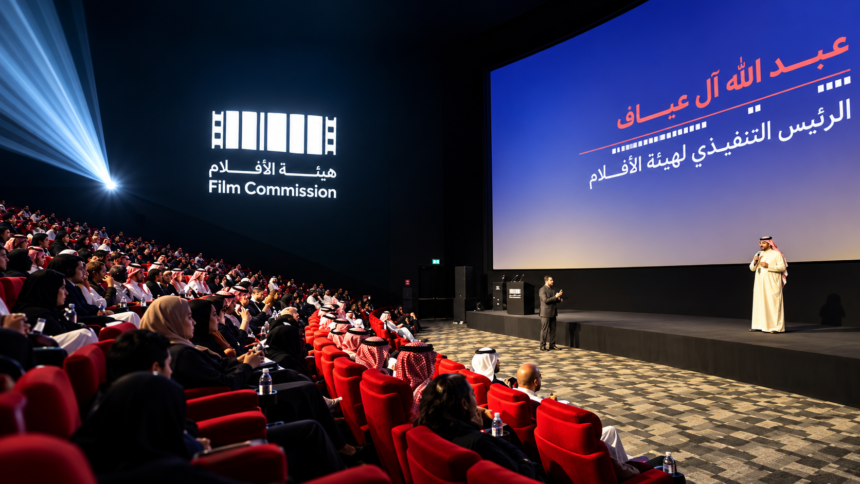
Saudi Film Commission event with an audience in a cinema auditorium
A Saudi Film Commission event highlights the rapid expansion of the Kingdom’s film and cultural industries
SHARE

Saudi Arabia’s cultural liberalization is no longer defined simply by the return of cinemas or the arrival of large concerts. The deeper change is that leisure itself is becoming a more visible, commercial and public part of everyday life. That makes the next phase less about whether entertainment can expand and more about how a fast-growing cultural economy will reshape social habits without weakening the identities the state also wants to preserve.

From exception to routine

The scale is now substantial. According to the Saudi Press Agency, the culture and heritage sector recorded 6,314 cultural-event days in 2025, more than double its target of 3,010, while employment in the sector reached 282,709, above the target of 247,000. The same official account said the Kingdom had 94 cultural facilities and 232 national heritage sites open to visitors.

Entertainment has expanded even faster. The General Entertainment Authority reported more than 89 million visits to entertainment activities in 2025, alongside 1,690 events, 6,490 licenses and 472 licensed entertainment destinations. A separate Quality of Life Program update put the broader stock of entertainment venues at 954 and said the market hosted 40 internationally branded entertainment events during the year.

These figures matter because they suggest a shift from occasional spectacle to infrastructure. Cinemas, festivals, sports events and seasonal attractions create repeatable social routines: going out at night, spending on experiences, meeting friends in public spaces and treating leisure as a normal household budget item. The film sector illustrates this normalization. The Saudi Film Commission said 17.5 million cinema tickets were sold in 2024 across 64 cinema locations and 630 screens.

A managed hybrid, not simple Westernization

It would be misleading, however, to describe the change as straightforward Westernization. Saudi cultural policy is trying to open the country to global entertainment while simultaneously investing in Arabic language, heritage, museums, local film and national cultural production. The Ministry of Culture explicitly frames its strategy around making “culture a way of life.”

The official statistical system itself now measures participation in cultural events, entertainment seasons, music, sports and other leisure activities across all 13 regions, indicating how firmly these activities have entered the policy definition of everyday social life.

The key question is whether global formats will mainly broaden consumer choice or gradually influence deeper social values. For younger Saudis, global music, film, gaming and sports culture can expand reference points and social aspirations. Yet imported forms are also being localized: international franchises operate alongside Saudi films, heritage festivals, Arabic creative industries and domestic fashion, food and design.

This makes cultural identity less a choice between tradition and modernity than a contest over how the two are combined. A concert, film premiere or major sporting event may look global in format while still being experienced within a distinctly Saudi social and regulatory context.

The economic layer

Cultural change is also becoming an employment and consumption story. A workforce of 282,709 indicates that culture is increasingly a labor market, not only a policy instrument. New jobs in events, media, film, design, hospitality and venue management can make creative careers more socially established, especially for younger workers.

But headline employment figures do not reveal job quality, wages, career durability or dependence on government-supported demand. The real test will be whether private spending and commercially viable local content can sustain the ecosystem if public investment becomes more selective.

Where friction may emerge

Several tensions remain. Large events are concentrated heavily in major urban centers, raising the question of whether cultural liberalization will be experienced equally across regions. Cost is another dividing line: a lifestyle built around ticketed events, restaurants and branded experiences may widen differences between households with different disposable incomes.

There is also a cultural-policy dilemma. The more successful Saudi Arabia becomes at importing global entertainment, the stronger the need to ensure that local creators capture attention, revenue and distribution. Otherwise, cultural opening could expand consumption faster than domestic cultural production.

A cautious outlook

Saudi Arabia has already moved beyond the symbolic phase of reopening cinemas and permitting concerts. The evidence now points to a broader reorganization of leisure, work and public space.

The outcome is unlikely to be either cultural convergence with the West or a simple preservation of older patterns. More plausibly, the Kingdom is building a hybrid social model in which global entertainment, commercial consumption and national identity develop together. Whether that balance proves durable will depend on affordability, regional inclusion, the strength of local creative industries and the ability of institutions to manage social change without reducing culture to spectacle.


TAGGED:cinemasentertainmentleisureLifestyleSaudi Arabia
Share This Article
Facebook LinkedIn Email Copy Link Print
Previous Article Cargo ship sailing near the Bab al-Mandab Strait between the Red Sea and Gulf of Aden From Energy Security to Political Stability: Rethinking the Gulf’s Regional Priorities
Leave a Comment Leave a Comment

Click here to cancel reply.

Please Login to Comment.

Newsletter

Saudi Arabia and Gulf news, analysis and business insights delivered to your inbox.

Thank you!

You have successfully joined our subscriber list.

Stay Informed with Reliable and Timely Updates!

Independent analysis of Saudi Arabia and the Gulf, delivered clearly and on time. Follow Arabinform across our platforms for reliable updates, key economic developments, regulatory changes and insights that matter.
FacebookLike
XFollow
TelegramFollow
Google NewsFollow
LinkedInFollow
RSS FeedFollow

You Might Also Like

Two oil tankers moored at an offshore loading terminal in the Red Sea, with pipelines and marine infrastructure extending into the distance.
Politics

Two Seas and One Barrel: How Geopolitics Is Rewriting Saudi Oil Logistics

By
Arabinform Editorial
Kingdom Centre Tower and Riyadh skyline, Saudi Arabia
Business and Economy

Who Owns Riyadh? Saudi Arabia Opens the Property Door

By
Arabinform Editorial
Composite illustration of a football star in an Al Nassr jersey against the Riyadh skyline, symbolizing Saudi Arabia’s growing global influence through football.
EntertainmentTravel

The Ronaldo Doctrine: How One Footballer Became Saudi Arabia’s Most Valuable Investment

By
Arabinform Editorial
Saudi Crown Prince Mohammed bin Salman with Chinese President Xi Jinping in Riyadh
Opinion

The Gulf’s New Economic Power Play

By
Amin Bagheri
site logo
Twitter Facebook Linkedin Telegram Rss

About US

The Arabinform Journal. Independent analytical platform covering business, finance, politics, technology, and global affairs in the Arab world and beyond

Creative Commons License
Top Categories
  • World
  • Business and Economy
  • Politics
  • Technology
  • Environment
  • Opinion
Usefull Links
  • About Us
  • Terms & Conditions
  • Privacy Policy
  • Cookie Policy
  • Op-Ed Submission Guidelines
  • Contact Us
  • Sitemap

© 2026 The Arabinform Journal.
All rights reserved.
All registered trademarks herein are the property of their respective owners.

Welcome Back!

Sign in to your account

Username or Email Address
Password

Lost your password?

Not a member? Sign Up