



Sunday, 23 Aug 2026
  • About Us
  • Contact Us
  • Sitemap
Subscribe
site logo
  • World
    • Travel
  • Politics
    Oil tanker sailing through the Strait of Hormuz near a rocky coastline

    The Post-Hormuz World: How One Strait Redrew the Global Order

    By
    Arabinform
    Illustration of Gulf security forces, naval patrols, drones, energy infrastructure and ports symbolizing the Gulf’s new security bargain

    The Gulf’s New Security Bargain: Autonomy Without Abandoning America

    By
    Arabinform
    Saudi-American Arms Deal Signals Strategic Shift Amid Regional Realignment

    Saudi-American Arms Deal Signals Strategic Shift Amid Regional Realignment

    By
    Arabinform
  • Business and Economy
  • Technology
  • Environment
  • Opinion

    Global Surge in Gold Investment Signals Flight to Safety Amid Political Uncertainty

    By
    Arabinform

    Transatlantic Turbulence Fuels U.S. Economic Strategy Shift

    By
    Arabinform

    Awaiting the White Swans: Could Sanctions on Russia Be Lifted Soon?

    By
    Arabinform

    OPEC+ on the Brink: Structural Pressures Undermine Oil Pact Stability

    By
    Arabinform

    Algeria’s Energy Strategy: Balancing Hydrocarbons and the Green Transition

    By
    Arabinform

    Trump’s Second Term: A Fast Start With Fading Momentum

    By
    Arabinform
  • Op-Ed Submission Guidelines
  • 🔥
  • Business and Economy
  • Saudi Arabia
  • World
  • China
  • Politics
  • energy
  • Opinion
  • Travel
  • Gulf
  • economy
Font ResizerAa
The Arabinform JournalThe Arabinform Journal
Search
  • World
  • Politics
  • Business and Economy
  • Technology
  • Environment
  • Travel
  • Opinion
  • Op-Ed Submission Guidelines
  • Contact Us
  • About Us
Have an existing account? Sign In
Follow US
© Copyright 2007-2026 The Arabinform Journal. All rights reserved. All registered trademarks herein are the property of their respective owners.
The Arabinform Journal > Blog > Business and Economy > The Gulf Has the Capital for the AI Boom. But Does It Have the Power?
Business and Economy

The Gulf Has the Capital for the AI Boom. But Does It Have the Power?

The Gulf’s AI infrastructure push could create a new digital comparative advantage based on capital, energy and speed. Its success, however, will depend on overcoming grid, cooling, water, chip-supply and demand risks before announced gigawatts become productive assets.

Arabinform
Last updated: August 23, 2026 11:45 am
By
Arabinform
5 Min Read
Share
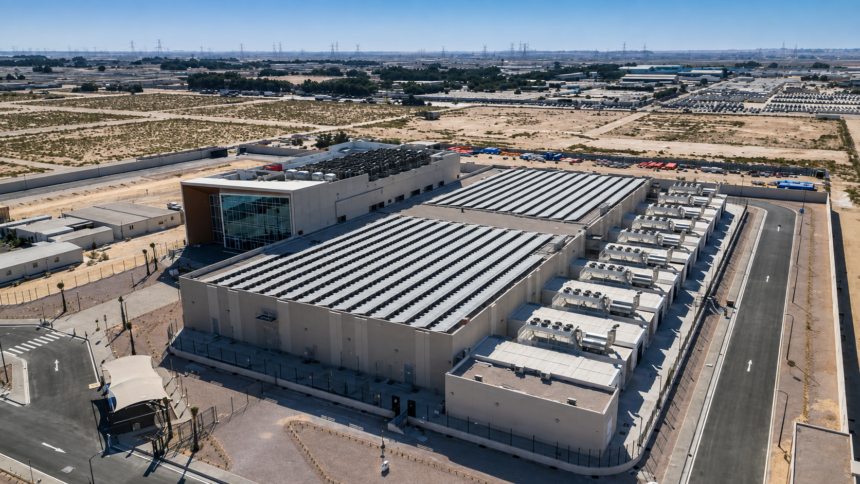
A large data center complex in the Gulf surrounded by desert infrastructure and power transmission lines
Rapid expansion of AI and data center capacity across the Gulf is increasing demand for electricity, cooling and supporting infrastructure
SHARE

The Gulf’s AI strategy is beginning to look less like a technology policy than a new form of industrial policy. Saudi Arabia and the United Arab Emirates are trying to turn abundant capital, relatively low-cost energy and sovereign balance sheets into a new export: computing power. The opportunity is real. But the decisive constraint may not be money. It may be whether Gulf power systems can deliver enough reliable electricity, cooling and network capacity quickly enough to keep pace with the AI investment cycle.

A race measured in megawatts

The scale-up is already visible. Saudi Arabia says its operational data-centre capacity rose from 68 megawatts in 2021 to more than 440 MW in 2025, with more than 60 data centres and investment exceeding US $4.3 billion, according to the Saudi Press Agency. Humain, the Public Investment Fund-backed AI company, has secured financing terms for up to 250 MW of new capacity and is targeting roughly 6 GW by 2034, Reuters reported in January.

In the UAE, Stargate UAE is being built as a 1 GW AI cluster inside a planned 5 GW AI campus in Abu Dhabi. G42 said construction of the first 200 MW was well underway in late 2025, with delivery planned for 2026. Those numbers are large enough to shift the region from a market that mainly consumes cloud services toward one that could host globally traded AI workloads.

Yet announced capacity is not the same as energised capacity. The International Energy Agency said in April 2026 that electricity consumption by AI-focused data centres jumped 50% in 2025, while total data-centre demand reached about 485 TWh. It expects total demand to roughly double to 950 TWh by 2030, but warns that bottlenecks across power infrastructure, equipment and chips are already constraining more aggressive expansion scenarios.

The energy advantage becomes a grid problem

The Gulf’s apparent comparative advantage is straightforward: abundant gas, strong solar resources, available land and governments capable of coordinating large infrastructure projects. For AI developers, the cost and speed of securing electricity can matter as much as proximity to customers. Where grid queues stretch for years, the GCC can plausibly compete by offering land, financing and generation together.

But cheap energy is not the same as unlimited power. Gigawatt-scale AI campuses resemble major industrial facilities in their electricity requirements, while Gulf grids must simultaneously accommodate air conditioning, desalination, industrial expansion and population growth. The IEA estimates that Middle Eastern electricity demand grew by nearly 4% in 2025, even before many of the region’s largest AI projects reached full scale.

Cooling adds another constraint. An April 2026 policy note from the Middle East Council on Global Affairs argues that the GCC’s extreme heat and water scarcity create a difficult water-energy trade-off for data centres. More water-efficient cooling can reduce direct consumption, but may increase electricity requirements or require costlier liquid-cooling technologies.

A comparative advantage – or an expensive subsidy?

The deeper economic question is whether the Gulf can turn this infrastructure into a durable export industry rather than a sovereign-funded capacity race. If global technology companies rent Gulf compute because it is genuinely cheaper, faster and more reliable, the region could convert its energy base into a new digital comparative advantage. The logic resembles earlier Gulf strategies in aluminium, petrochemicals and aviation: use a structural input advantage to build globally traded products and services.

But AI carries different risks. Hardware depreciates rapidly, improvements in model and chip efficiency could change capacity requirements, and access to frontier processors remains geopolitical. In July 2026, Washington eased export restrictions for approved UAE entities, allowing easier access to advanced US computing equipment; that preferential treatment itself illustrates how infrastructure economics can depend on strategic alignment as much as electricity prices.

The real test, therefore, is not how many gigawatts are announced. It is how many can be connected, cooled, equipped with leading-edge chips and sold to paying customers without excessive fiscal or environmental costs. The Gulf has the capital for the AI boom. Whether it has the power will depend on how successfully it turns its energy system into digital infrastructure — and whether global demand arrives fast enough to justify the build-out.

TAGGED:AIdata centreselectricityenergy
Share This Article
Facebook LinkedIn Email Copy Link Print
Previous Article Saudi Arabia, Turkey and Pakistan at the Mecca Agreement signing ceremony Mecca Agreement: A Regional Security Hedge, Not Yet a New NATO
Leave a Comment Leave a Comment

Click here to cancel reply.

Please Login to Comment.

Newsletter

Saudi Arabia and Gulf news, analysis and business insights delivered to your inbox.

Thank you!

You have successfully joined our subscriber list.

Stay Informed with Reliable and Timely Updates!

Independent analysis of Saudi Arabia and the Gulf, delivered clearly and on time. Follow Arabinform across our platforms for reliable updates, key economic developments, regulatory changes and insights that matter.
FacebookLike
XFollow
TelegramFollow
Google NewsFollow
LinkedInFollow
RSS FeedFollow

You Might Also Like

Saudi Arabia skyline with investment growth charts and Arabinform Journal banner for an article on the Kingdom’s changing investment strategy.
Business and Economy

Saudi Arabia’s New Economic Test: From Megaprojects to Measurable Returns

By
Arabinform
Business and Economy

Gulf States May Play a Key Role in America’s Mineral Strategy

By
Al-Qabas
Modern Kuwait city skyline with skyscrapers and a rising financial graph symbolizing economic growth
Business and Economy

Kuwaiti Economy at a Crucial Turning Point

By
Al-Qabas
Business and Economy

Saudi Sovereign Fund Eyes Europe Amid Diversification Push

By
Arabinform
site logo
Twitter Facebook Linkedin Telegram Rss

About US

The Arabinform Journal. Independent analytical platform covering business, finance, politics, technology, and global affairs in the Arab world and beyond

Creative Commons License
Top Categories
  • World
  • Business and Economy
  • Politics
  • Technology
  • Environment
  • Opinion
Usefull Links
  • About Us
  • Terms & Conditions
  • Privacy Policy
  • Cookie Policy
  • Op-Ed Submission Guidelines
  • Contact Us
  • Sitemap

© 2026 The Arabinform Journal.
All rights reserved.
All registered trademarks herein are the property of their respective owners.

Welcome Back!

Sign in to your account

Username or Email Address
Password

Lost your password?

Not a member? Sign Up