


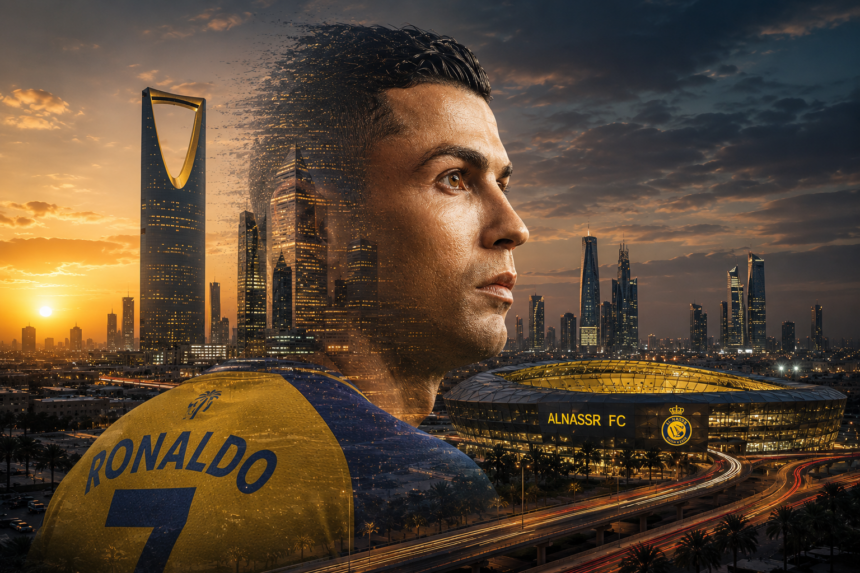
Cristiano Ronaldo was initially presented as the Saudi Pro League’s defining football signing. Three years later, his wider function is clearer: he has become a distribution system for Saudi Arabia’s national brand.
His goals still matter, but they are no longer the principal measure of return. Ronaldo attracts audiences to Saudi football, introduces potential visitors to Saudi destinations and links the country’s economic transformation to one of the world’s most recognisable personal brands. This is the “Ronaldo Doctrine”: using an individual with globally portable influence to connect sport, tourism, commercial diplomacy and national strategy.
From footballer to media platform
Ronaldo’s arrival at Al Nassr in December 2022 immediately made Saudi football part of the daily international sports agenda. The league subsequently recruited other prominent players, but Ronaldo remained its essential reference point — the name through which unfamiliar audiences discovered Saudi clubs, cities and competitions.
The commercial expansion is measurable, although not solely attributable to him. The Saudi Pro League says its matches reached roughly 180 countries and up to 230 million viewers during the 2025–26 cycle, while its social-media following exceeded 20 million. International media-rights revenue reportedly rose by 20%, supported by 37 broadcast agreements.
This suggests that Ronaldo did not merely increase the number of viewers; he changed the league’s negotiating position. Broadcasters that previously saw Saudi football as a domestic or regional product could now sell access to an existing global fan base.
A 2025 study published in Contemporary Economic Policy found that Ronaldo increased attendance demand by an estimated 20% of stadium capacity when playing at home and 15% when appearing away. Yet the effect was highly personal: an Associated Press report from Hong Kong described more than 30,000 spectators attending an Al Nassr match, while a fixture without Ronaldo’s club attracted a far smaller crowd.
That is both the strength and weakness of the model. Saudi football has acquired attention faster than it has built loyalty.
Selling a country through a familiar face
The strategy now extends well beyond the league. In 2025, the Saudi Tourism Authority placed Ronaldo at the centre of its global “Unreal Calendar” campaign, presenting sporting events as an entry point to heritage, entertainment and destinations including Riyadh, Jeddah, Diriyah and AlUla.
The campaign’s message — come for football, remain for something more — captures the economic logic. Ronaldo reduces the distance between an unfamiliar destination and an international consumer. His endorsement cannot guarantee a holiday booking, but it can make Saudi Arabia appear more accessible, contemporary and connected to global popular culture.
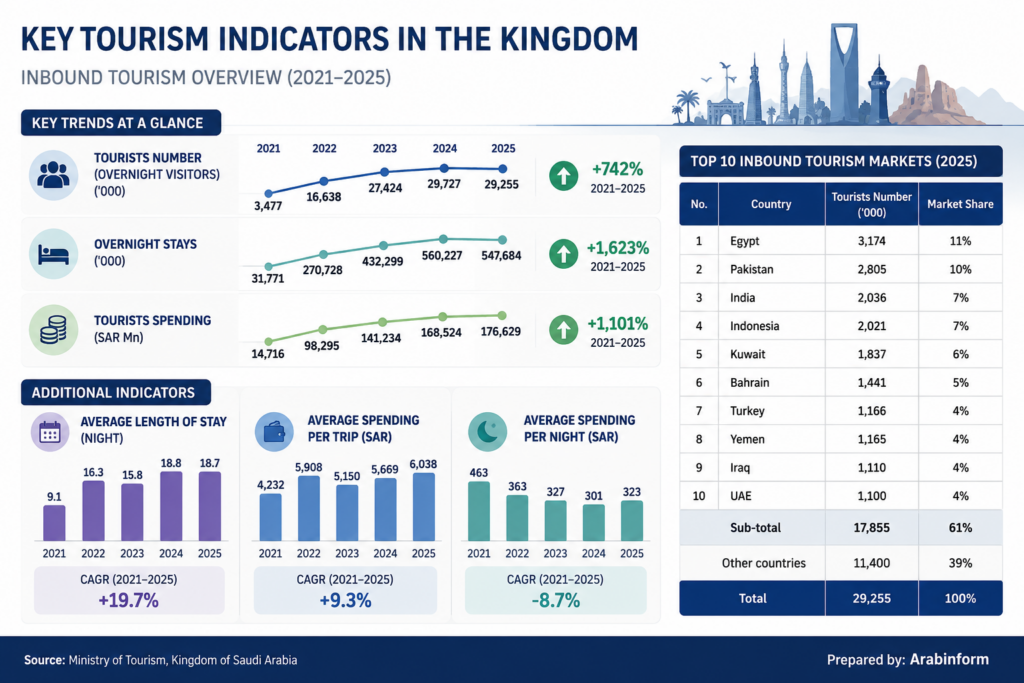
There are signs of broader reputational movement. Brand Finance ranked Saudi Arabia 17th in its 2026 Global Soft Power Index, three places higher than the previous year, citing diplomacy, economic diversification, culture, tourism and sport. However, it would be misleading to attribute that improvement to one footballer.
The more defensible conclusion is that Ronaldo has changed what many audiences encounter first when Saudi Arabia appears in their media feeds. Whether that visibility changes deeper opinions about the country remains less certain.
Economic diplomacy in football boots
Under Vision 2030, sport is expected to support tourism, entertainment, private investment, employment and urban development. Ronaldo gives those separate policies a common international narrative.
His influence also operates as economic diplomacy. A Ronaldo match can attract broadcasters, sponsors, executives and visitors who might otherwise have little engagement with Saudi Arabia. His contract extension through 2027 preserves that attention while the kingdom builds stadiums, develops clubs and prepares the international narrative surrounding the 2034 World Cup, which FIFA formally awarded to Saudi Arabia in December 2024.
The 2034 tournament is therefore not the beginning of the strategy but its intended culmination. Ronaldo is helping Saudi Arabia occupy global football’s attention years before the first World Cup match is played.
The conversion problem
The real test is what remains after Ronaldo. Television reach is not the same as profitable media rights; social followers are not necessarily loyal supporters; and tourism advertising does not prove that visitors are spending because of a celebrity campaign.
There is also a reputational risk. Critics describe Saudi sports investment as “sportswashing”, arguing that high-profile events can divert attention from political and human-rights controversies. Greater visibility may therefore produce greater scrutiny as well as greater influence.
Most importantly, imported star power cannot substitute indefinitely for competitive clubs, strong academies, fuller stadiums and commercially sustainable institutions. If audiences follow Ronaldo rather than Al Nassr or the league itself, his eventual retirement could expose a substantial attention gap.
The Ronaldo Doctrine has succeeded at its first objective: few investments could have placed Saudi Arabia inside global football culture so quickly. Its final value, however, will depend on conversion. The kingdom must turn borrowed celebrity into lasting tourism demand, media revenue, local participation and institutional credibility. Ronaldo opened the door; Saudi Arabia still has to persuade the audience to remain.