


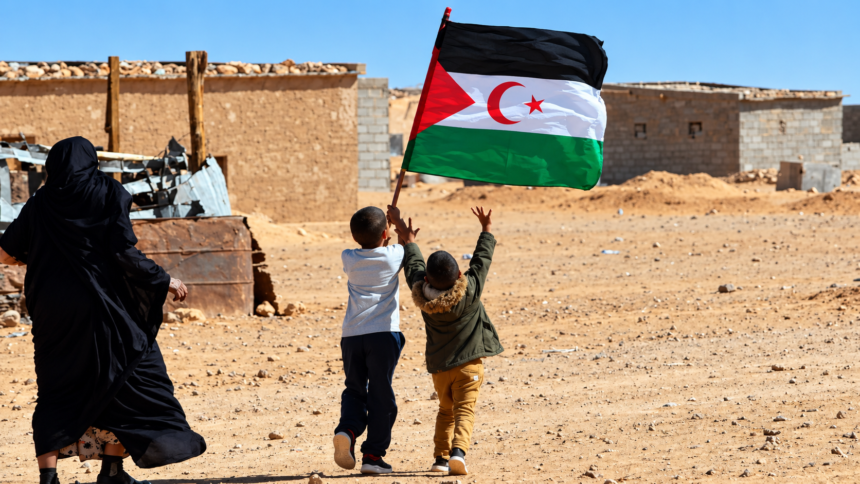
For half a century, Western Sahara has existed between two competing realities. In international law, the Sahrawi people retain a right to self-determination. In diplomacy, however, the center of gravity has moved steadily toward Morocco’s proposal for autonomy under Moroccan sovereignty. France’s 2024 policy shift accelerated that movement, but the more consequential change came a year later, when the UN Security Council itself placed Morocco’s autonomy proposal at the center of renewed negotiations.
From referendum to autonomy
The legal foundation of the dispute has not disappeared. In its 1975 advisory opinion, the International Court of Justice found that the evidence did not establish territorial-sovereignty ties between Western Sahara and Morocco or Mauritania capable of overriding the application of self-determination. Spain withdrew later that year, Morocco established control over most of the territory, and conflict with the Polisario Front followed.
A UN-backed ceasefire in 1991 was intended to create conditions for a referendum, but disputes over voter eligibility and the terms of the process prevented it from taking place. MINURSO, whose very name still refers to a referendum, remains deployed.
For decades, the result was diplomatic stalemate: Morocco consolidated control while the UN continued to frame a settlement around self-determination. Morocco’s 2007 autonomy initiative offered Sahrawis substantial regional self-government but within Moroccan sovereignty.
The United States broke with longstanding Western caution in December 2020 by recognizing Moroccan sovereignty over Western Sahara and backing the autonomy initiative as the basis for settlement.
France was an accelerator, not the endpoint
France made its own major shift in July 2024. President Emmanuel Macron declared that “the present and future” of Western Sahara fell within Moroccan sovereignty and described the autonomy plan as the only basis for a negotiated political solution.
The diplomatic coalition subsequently widened. In June 2025, the United Kingdom called Morocco’s autonomy proposal the “most credible, viable and pragmatic basis” for resolving the dispute, while still supporting a UN-led, mutually acceptable settlement.
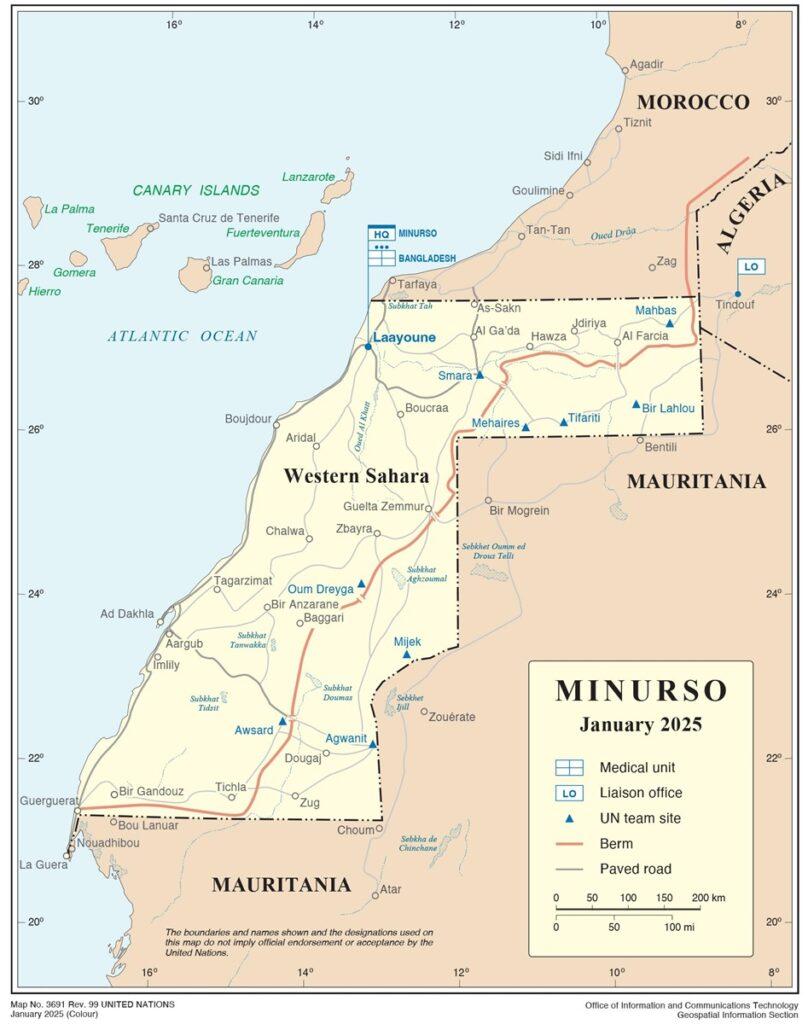
The decisive institutional shift came on 31 October 2025. Security Council Resolution 2797 noted growing international support for Morocco’s proposal and stated that “genuine autonomy under Moroccan sovereignty could constitute a most feasible solution.” Yet the resolution did not abolish self-determination: it simultaneously called for a just, lasting and mutually acceptable solution consistent with the UN Charter, including that principle.
That ambiguity now lies at the heart of the conflict.
What does self-determination still mean?
In February 2026, UN and US officials facilitated negotiations involving Morocco, the Polisario Front, Algeria and Mauritania, with discussions taking Morocco’s autonomy proposal as their basis. The UN nevertheless stressed that “significant work” remained, including on the key issue of Sahrawi self-determination.
The question is therefore no longer simply whether the UN recognizes self-determination; it does. The harder question is what choices that principle will contain. Can self-determination remain meaningful if sovereign independence is effectively removed from the negotiating table?
There is also a significant gap between diplomatic momentum and judicial doctrine. In October 2024, the Court of Justice of the European Union ruled that EU-Morocco agricultural and fisheries agreements covering Western Sahara had been concluded without the consent of the Sahrawi people and therefore breached principles including self-determination. The Court continues to treat Western Sahara as separate from Morocco for these purposes.
Political pressure toward autonomy therefore coexists with legal constraints that Morocco’s diplomatic gains have not erased.
A narrowing path to independence
There is a further risk. MINURSO says the 1991 ceasefire broke down in 2020 and that low-intensity hostilities continue. If autonomy comes to be viewed as an externally predetermined settlement rather than a mutually accepted compromise, diplomatic convergence may not necessarily produce political legitimacy or durable peace.
France therefore did not eliminate Western Sahara’s last chance at independence. What it helped do was narrow the political space in which independence could realistically be negotiated. Resolution 2797 narrowed that space further.
The real test is whether future negotiations interpret self-determination as a meaningful choice over final political status, or principally as Sahrawi consent to the terms of autonomy. If the latter becomes the settled international approach, the independence project may survive in international law and Sahrawi political identity while becoming increasingly remote as a diplomatic outcome.

Pakistani researcher and writer pursuing a degree in Defense and Strategic Studies at Quaid-i-Azam University, Islamabad. He has also been associated with Pakistan’s Ministry of Defense as an intern. His research interests include international security, geopolitics, strategic affairs and international relations. His articles have appeared in Modern Diplomacy, Paradigm Shift, Stratheia and The Himalayan Research Institute.