



Friday, 14 Aug 2026
  • About Us
  • Contact Us
  • Sitemap
Subscribe
site logo
  • World
    • Travel
  • Politics
    Oil tanker sailing through the Strait of Hormuz near a rocky coastline

    The Post-Hormuz World: How One Strait Redrew the Global Order

    By
    Arabinform
    Illustration of Gulf security forces, naval patrols, drones, energy infrastructure and ports symbolizing the Gulf’s new security bargain

    The Gulf’s New Security Bargain: Autonomy Without Abandoning America

    By
    Arabinform
    Saudi-American Arms Deal Signals Strategic Shift Amid Regional Realignment

    Saudi-American Arms Deal Signals Strategic Shift Amid Regional Realignment

    By
    Arabinform
  • Business and Economy
  • Technology
  • Environment
  • Opinion

    Global Surge in Gold Investment Signals Flight to Safety Amid Political Uncertainty

    By
    Arabinform

    Transatlantic Turbulence Fuels U.S. Economic Strategy Shift

    By
    Arabinform

    Awaiting the White Swans: Could Sanctions on Russia Be Lifted Soon?

    By
    Arabinform

    OPEC+ on the Brink: Structural Pressures Undermine Oil Pact Stability

    By
    Arabinform

    Algeria’s Energy Strategy: Balancing Hydrocarbons and the Green Transition

    By
    Arabinform

    Trump’s Second Term: A Fast Start With Fading Momentum

    By
    Arabinform
  • Op-Ed Submission Guidelines
  • 🔥
  • Business and Economy
  • Saudi Arabia
  • World
  • China
  • Politics
  • energy
  • Opinion
  • Travel
  • Gulf
  • economy
Font ResizerAa
The Arabinform JournalThe Arabinform Journal
Search
  • World
  • Politics
  • Business and Economy
  • Technology
  • Environment
  • Travel
  • Opinion
  • Op-Ed Submission Guidelines
  • Contact Us
  • About Us
Have an existing account? Sign In
Follow US
© Copyright 2007-2026 The Arabinform Journal. All rights reserved. All registered trademarks herein are the property of their respective owners.
The Arabinform Journal > Blog > Business and Economy > Who Owns Riyadh? Saudi Arabia Opens the Property Door
Business and Economy

Who Owns Riyadh? Saudi Arabia Opens the Property Door

Saudi Arabia’s 2026 property and capital-market reforms are building a new gateway for foreign wealth, but their success will depend on whether incoming money expands housing supply and market liquidity rather than intensifying affordability pressures in Riyadh.

Arabinform
Last updated: August 14, 2026 4:05 pm
By
Arabinform
5 Min Read
Share
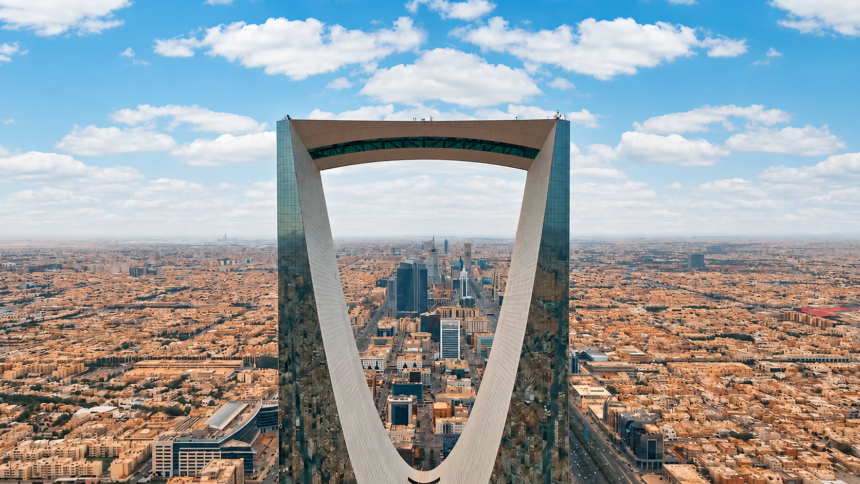
Kingdom Centre Tower and Riyadh skyline, Saudi Arabia
Kingdom Centre Tower overlooking Riyadh, Saudi Arabia
SHARE

Saudi Arabia’s decision to open more of its property market to non-Saudis is more than a real-estate reform. Combined with wider access to the stock market and residency incentives linked to property, it is creating a new architecture for attracting foreign capital. The opportunity is obvious; the harder question is whether that capital will finance new supply or simply bid up assets in cities where affordability is already strained.

A broader gateway

The new Real Estate Ownership System for Non-Saudis took effect on January 22, 2026. The Real Estate General Authority says residents, non-residents and foreign companies can now apply through the Saudi Properties portal, subject to geographical and regulatory controls. Riyadh, Jeddah, Makkah and Madinah are governed by designated ownership zones, while ownership in the two holy cities remains restricted to Saudi companies and Muslim individuals.

This is not an isolated opening. From February 1, the Capital Market Authority abolished the Qualified Foreign Investor framework and allowed all categories of foreign investors to participate directly in the Main Market. That gives overseas investors another route into the property story through listed developers, banks and companies with real-estate exposure, without requiring direct ownership of a building or plot.

Residency adds a third layer. Saudi Arabia’s Premium Residency Center offers a Real Estate Owner Residency product for qualifying residential property ownership or usufruct worth at least SAR4 million, with residency tied to continued ownership. The design suggests that the first wave of demand may be concentrated among affluent expatriates and high-net-worth investors rather than mass-market buyers.

Who will buy?

There is evidence of genuine interest, though survey appetite should not be confused with committed capital. Knight Frank’s 2026 Destination Saudi research, based on 1,550 respondents, found Riyadh was the preferred Saudi property destination for 55% of international investors, followed by Jeddah at 46%. The consultancy estimated that about $1.5 billion of private capital was targeting the residential market and another $3.4 billion was interested in branded residences.

That points to an immediate advantage for developers, particularly those selling premium apartments, mixed-use projects and branded homes. Foreign buyers can broaden the customer base, improve presales and make large projects easier to finance. But the real economic gain would come if foreign demand encourages developers to add supply rather than merely reprice existing stock.

The affordability test

That distinction matters in Riyadh. Knight Frank reported that residential transaction volumes and values in the capital fell 82% year-on-year in the first quarter of 2026, amid affordability pressure, softer mortgage demand and regional uncertainty. It also estimates Riyadh will need more than 305,000 additional homes by 2034 to accommodate population growth.

Foreign money therefore cuts both ways. If it funds construction, infrastructure and rental stock, it could deepen the market and ease supply constraints over time. If it concentrates on scarce land and completed prime units, it could reinforce the very affordability problem policymakers are trying to manage. The key question is not how many foreign buyers arrive, but where their money goes.
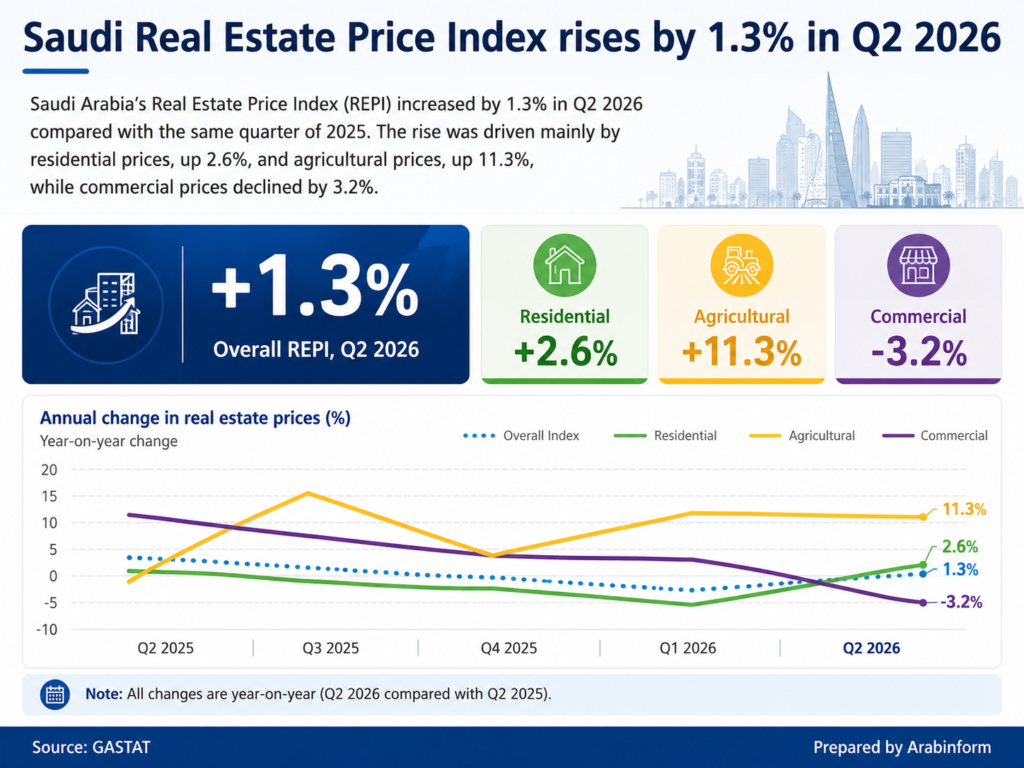
Saudi Arabia Real Estate Price Index rose 1.3% year-on-year in Q2 2026, with residential prices up 2.6%, agricultural prices up 11.3%, and commercial prices down 3.2%.
Saudi Arabia’s Real Estate Price Index increased by 1.3% year-on-year in Q2 2026. Source: GASTAT

Can Riyadh challenge Dubai?

Riyadh and Jeddah are now becoming more credible competitors for Gulf property capital, especially because Saudi demand is linked to corporate relocation, tourism, mega-projects and a much larger domestic population. Yet Dubai still sets a high benchmark for liquidity and familiarity: Dubai Land Department reported AED252 billion in real-estate transactions in the first quarter of 2026, across 60,303 transactions.

Saudi Arabia does not need to replicate Dubai to succeed. Its model is likely to be more selective, using zones, ownership limits and residency rules to steer capital toward strategic locations. The risk is that excessive restriction reduces liquidity; the opposite risk is that rapid liberalisation turns housing into an international investment asset faster than supply can respond.

The real test of the reform will be visible not in headline sales to foreign buyers, but in construction volumes, rental affordability, market transparency and the depth of secondary trading. If those improve together, foreign ownership could become a useful part of Vision 2030’s investment strategy. If prices rise faster than supply, the political and economic trade-off will become much harder to ignore.
TAGGED:Jeddahreal estateRiyadhSaudi Arabia
Share This Article
Facebook LinkedIn Email Copy Link Print
Previous Article Saudi Crown Prince Mohammed bin Salman with Chinese President Xi Jinping in Riyadh The Gulf’s New Economic Power Play
Leave a Comment Leave a Comment

Click here to cancel reply.

Please Login to Comment.

Newsletter

Saudi Arabia and Gulf news, analysis and business insights delivered to your inbox.

Thank you!

You have successfully joined our subscriber list.

Stay Informed with Reliable and Timely Updates!

Independent analysis of Saudi Arabia and the Gulf, delivered clearly and on time. Follow Arabinform across our platforms for reliable updates, key economic developments, regulatory changes and insights that matter.
FacebookLike
XFollow
TelegramFollow
Google NewsFollow
LinkedInFollow
RSS FeedFollow

You Might Also Like

Business and Economy

Gulf States May Play a Key Role in America’s Mineral Strategy

By
Al-Qabas
Business and Economy

Diamond Market Seeks Stability Amid Sanctions and Structural Change

By
Arabinform
Illustration of Gulf security forces, naval patrols, drones, energy infrastructure and ports symbolizing the Gulf’s new security bargain
PoliticsWorld

The Gulf’s New Security Bargain: Autonomy Without Abandoning America

By
Arabinform
Business and Economy

Gulf Aviation Projects Signal Strategic Leap in Global Connectivity

By
Arabinform
site logo
Twitter Facebook Linkedin Telegram Rss

About US

The Arabinform Journal. Independent analytical platform covering business, finance, politics, technology, and global affairs in the Arab world and beyond

Creative Commons License
Top Categories
  • World
  • Business and Economy
  • Politics
  • Technology
  • Environment
  • Opinion
Usefull Links
  • About Us
  • Terms & Conditions
  • Privacy Policy
  • Cookie Policy
  • Op-Ed Submission Guidelines
  • Contact Us
  • Sitemap

© 2026 The Arabinform Journal.
All rights reserved.
All registered trademarks herein are the property of their respective owners.

Welcome Back!

Sign in to your account

Username or Email Address
Password

Lost your password?

Not a member? Sign Up