


Saudi Arabia has emerged from the latest Strait of Hormuz shock looking less vulnerable than many of its Gulf peers, but the lesson is not that geography no longer matters. It is that the kingdom has built enough redundancy, fiscal depth and domestic growth momentum to absorb disruption — provided the shock remains temporary.
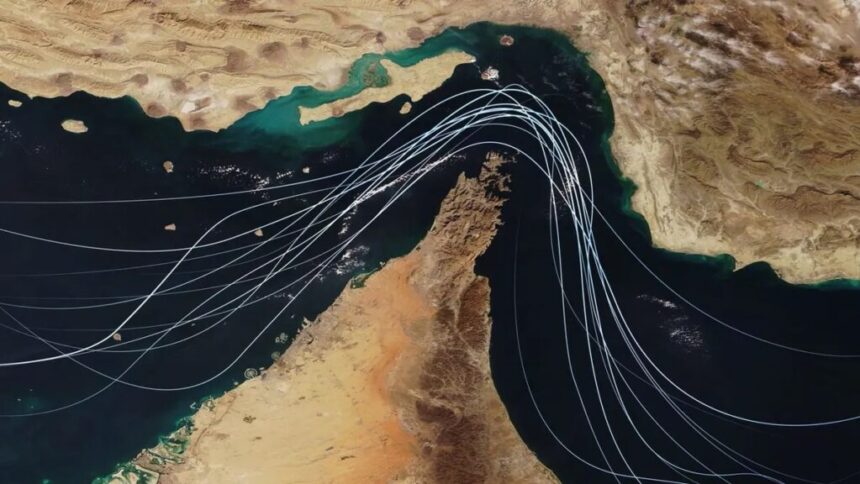
The Strait remains the region’s central energy bottleneck. The International Energy Agency estimates that nearly 20 million barrels per day of oil moved through Hormuz in 2025, including about 6.23 million b/d from Saudi Arabia. The same IEA assessment notes that Saudi Arabia’s East-West pipeline links Abqaiq to Yanbu on the Red Sea, with a design capacity of 5 million b/d and reported capacity of 7 million b/d, though sustained operation at that level has not been fully tested.
That caveat is crucial. Saudi Arabia can redirect a meaningful share of crude away from the Gulf, but it cannot make Hormuz irrelevant overnight. The real question is whether rerouting capacity, port logistics and tanker availability can work under prolonged stress, not just during a limited disruption.
A diversified buffer
The economic cushion is also broader than pipelines. GASTAT reported that Saudi real GDP grew 3.0 percent year on year in the first quarter of 2026, with non-oil activities contributing more to growth than oil activities. Financial, insurance and business services expanded by 5.4 percent, while non-refining manufacturing grew by 4.0 percent.
This matters because a Hormuz shock is not only an oil-export problem. It can weaken investor confidence, raise shipping costs, delay imports and disrupt project execution. A larger non-oil base gives Riyadh more domestic demand to lean on, but it also creates new exposure: tourism, logistics, construction and finance are all sensitive to perceptions of regional risk.
Reuters reported on June 3 that the IMF saw the Saudi economy as resilient during the war-related disruption, helped by rerouting through the East-West pipeline and Red Sea ports, but warned that growth could fall to about 2 percent in 2026 if confidence and non-oil activity remain under pressure.
Fiscal strength with a cost
Saudi Arabia’s public finances give it another shock absorber. The Ministry of Finance’s FY2026 budget projects SAR 1.313 trillion in expenditure, SAR 1.147 trillion in revenue and a deficit of SAR 165 billion, or around 3.3 percent of GDP. It also expects public debt to rise to 32.7 percent of GDP in 2026 and government reserves at SAMA to remain around SAR 390 billion.
These numbers suggest room to borrow, smooth spending and protect priority projects. But they also show the price of resilience: Saudi Arabia is using fiscal space to sustain transformation while oil revenue remains exposed to both price volatility and security risk. The key issue is whether deficits remain a strategic bridge to diversification or become a recurring cost of maintaining growth.
A cautious outlook
The Hormuz shock strengthens the case for Saudi Arabia’s logistics strategy, Red Sea infrastructure and industrial localization. It also reinforces Riyadh’s argument that Vision 2030 is not only a diversification program, but a national resilience project.
Yet resilience is not the same as invulnerability. A short disruption can be managed through pipelines, reserves and policy coordination. A longer conflict would test export capacity, insurance markets, investor sentiment and the government’s ability to prioritize spending. Saudi Arabia may be one of the Gulf economies best placed to withstand a Hormuz shock, but the durability of that position will depend on whether the shock remains a maritime interruption — or becomes a lasting regional risk premium.